Riccia subbifurca
Riccia subbifurca
Description
Riccia subbifurca is a species of liverwort belonging to the Ricciaceae family. Unlike many aquatic species in this genus, this specific moss is typically found in terrestrial environments. It is a scientifically significant bryophyte known for its distinct thalloid structure and adaptation to specific damp niches in various parts of the Northern Hemisphere.
The geographic range of this species extends across Europe and parts of North Africa and North America. It generally colonizes open, moist, and disturbed habitats such as bare soil, clay banks, or rocky crevices. These environments are characterized by their ability to provide enough moisture to support the moss while preventing competition from more robust vascular plants.
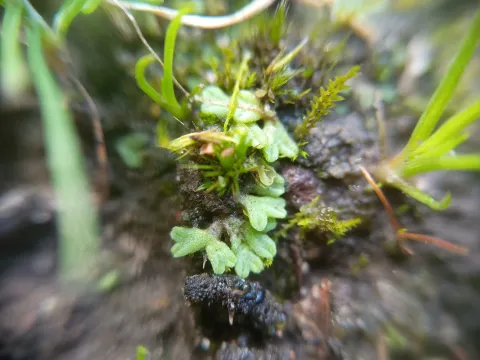
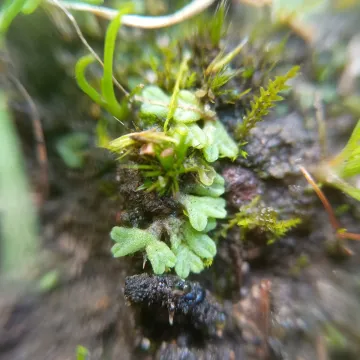
Botanically, the plant forms small, rosette-shaped thalli with dichotomous branching. The thallus surface typically features a distinct groove, which is a structural adaptation for channeling and conserving water. The color ranges from bright green to yellowish-green depending on light exposure and water availability. The plant reproduces primarily through spores, which develop within the thallus tissue, but it can also spread vegetatively through thallus fragments.
Cultivation of this liverwort requires high atmospheric humidity and a substrate that retains moisture without becoming waterlogged. The soil should be slightly acidic or neutral, free from strong fertilizers, as liverworts are generally sensitive to nutrient spikes. Providing indirect light and a stable temperature is essential to prevent the thallus from drying out or suffering from fungal infections.
While not a traditional food or fiber crop, Riccia subbifurca is of interest in specialized horticulture and ecology. It is utilized in terrariums and paludariums to recreate natural forest floor conditions. In terms of maintenance, monitoring for pests like aphids or fungus gnats in closed systems is crucial, and maintaining clean water sources is essential to avoid the buildup of minerals that could harm the moss.
- Classification: Order Marchantiales, Family Ricciaceae.
- Structure: Thalloid, non-vascular.
- Environmental Sensitivity: High tolerance for moisture fluctuations but low tolerance for chemical pollution.
- Propagation: Primarily spores and vegetative fragmentation.
Photo gallery