Rosemary grevillea
Grevillea rosmarinifolia A. Cunn.
Description
Rosemary grevillea (Grevillea rosmarinifolia) is an evergreen ornamental shrub belonging to the Proteaceae family. Native to southeastern Australia, this plant is well-regarded for its resilience and unique aesthetic qualities, making it a popular choice in xeriscaping and sustainable garden design across Mediterranean climates.
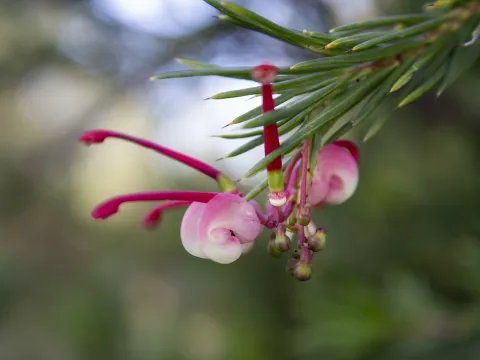
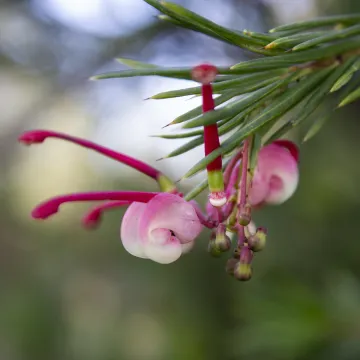
Botanically, the plant is characterized by its dense, branching habit and narrow, rosemary-like foliage, which gives it a compact and elegant appearance. The inflorescences are distinct, bearing clusters of red, pink, or white flowers shaped like toothbrushes. These flowers are highly adapted to nectar-feeding birds, which play a crucial role in the plant's pollination cycle in its natural habitat.
Cultivation requires specific environmental conditions to ensure healthy growth. Rosemary grevillea thrives in well-drained, acidic to neutral soils and prefers full sun exposure. It is a drought-tolerant species once established; however, it requires protection from hard frosts, as it can be damaged by temperatures falling significantly below zero degrees Celsius, making container gardening common in colder regions.
Agrotechnical management focuses primarily on irrigation control and nutritional balance. It is vital to avoid waterlogging the root zone, as the species is highly susceptible to root-rot pathogens. Furthermore, when applying fertilizers, growers must ensure they use low-phosphorus formulas. Excessive phosphorus is toxic to most members of the Proteaceae family, potentially leading to plant decline or mortality.
The primary use of the rosemary grevillea is for ornamental landscaping, serving as an excellent screen, hedge, or standalone specimen. Growers should monitor for the following common issues:
- Root rot caused by poor soil drainage.
- Aphids and scale insects that infest the dense terminal foliage.
- Nutrient deficiencies, particularly chlorosis due to high soil pH levels.
Photo gallery