
Smooth hydrangea
Hydrangea arborescens L.
Description
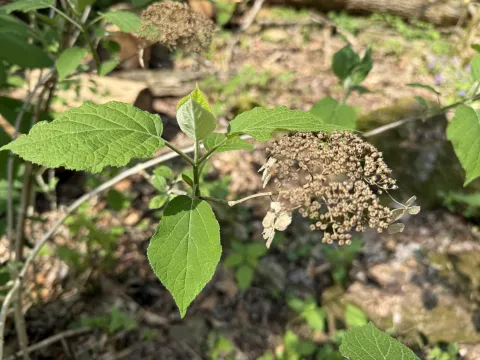
The smooth hydrangea (Hydrangea arborescens L.) is a deciduous flowering shrub belonging to the family Hydrangeaceae. It is widely recognized in horticulture for its spectacular, large, mophead-like white blooms that appear consistently throughout the summer season.
Native to North America, the plant is naturally found in wooded areas and rocky ravines. Due to its inherent robustness, it has become a staple ornamental shrub in gardens across various temperate zones, valued for its ability to thrive even in challenging urban environments.
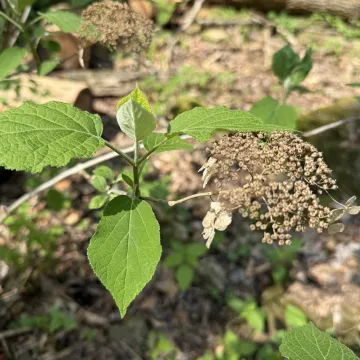
Botanically, the species is distinguished by its upright, multi-stemmed habit, reaching heights of 3 to 5 feet. Its leaves are broad, ovate, and serrated, providing a lush green backdrop for the massive clusters of sterile flowers that develop on new growth, ensuring reliable blooming every year.
Cultivation requires specific environmental conditions to achieve optimal floral display. The ideal site should offer partial shade, particularly protection from harsh afternoon sun, and consistent moisture. Soil should be rich in organic matter and maintain a slightly acidic pH to support healthy nutrient uptake.
- Ensure consistent soil moisture throughout the growing season.
- Apply organic mulch to protect roots and retain moisture.
- Prune back stems in late winter or early spring for vigor.
- Incorporate acidic fertilizers to prevent chlorosis.
In landscaping, the smooth hydrangea serves multiple functions, ranging from mass plantings in woodland borders to providing dramatic structure in foundation beds. Its versatility makes it a favorite among designers for softening edges and adding a long-lasting seasonal focus to outdoor spaces.
While generally hardy, the plant is susceptible to leaf spot, powdery mildew, and botrytis blight under conditions of poor air circulation or excessive humidity. Pests such as aphids and spider mites may also appear, requiring integrated pest management practices to preserve the plant's aesthetic quality.
Photo gallery