ВЛ
22 December 2012
Прекрасный препарат. Работали им в прошлом году и наверняка будем работать в следующем.


Herbicides, Desiccants
Nanjing Red Sun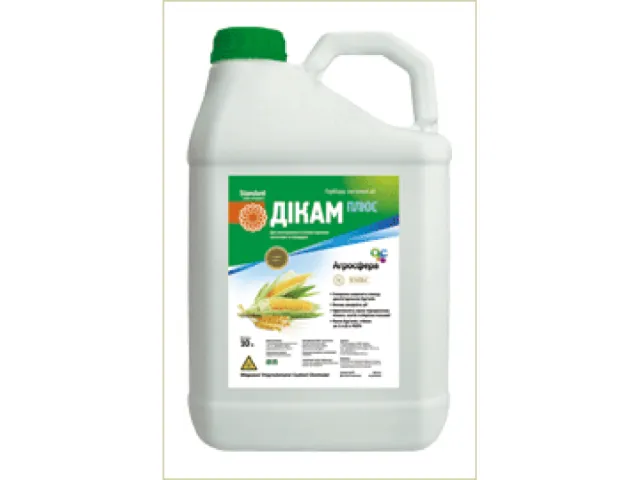
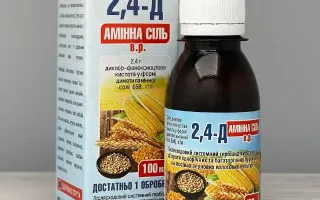
A powerful systemic herbicide combining Dicamba and 2,4-D for effective control of perennial and annual broadleaf weeds in cereals and corn.
"Dikam Plus" is a systemic herbicide engineered to tackle the most resilient broadleaf weeds that threaten cereal crops and corn production. By synergizing Dicamba and 2,4-D amine salt, this product offers a dual-action approach, effectively neutralizing troublesome perennials like Canada thistle and field bindweed, as well as common annuals like lamb's quarters.
Designed for post-emergence application, this herbicide serves as a critical tool for field cleanup. Agronomists typically deploy "Dikam Plus" when a field exhibits mixed weed populations that are resistant to standard treatments. Since it is a systemic herbicide, it travels through the vascular system of the weeds, ensuring that the root structures are compromised, which is essential for preventing regrowth in later stages of crop development.
To maximize results, "Dikam Plus" is formulated for a single high-impact application per season. Selecting the optimal timing—targeting active weed growth—is crucial. As a Class 3 hazard product, standard safety protocols are required during handling and application. With a pre-harvest interval of just 1 day, it offers significant flexibility, allowing farmers to manage their fields efficiently without long waiting periods before subsequent agricultural tasks.
|
Last Processing Date, Days
Last Processing Date, Days
Number of days from processing to harvest cleanup |
1 |
|---|---|
|
By type of action
By type of action
Depending on their ability to move through living tissues, herbicides are divided into contact and systemic. Contact herbicides cause local damage to plant tissue upon contact, which dies or gradually degrades. This action does not always completely destroy the plant; often, its... |
|
|
By application method
By application method
Based on the method of application, herbicides are divided into foliar, soil, and root herbicides. Foliar herbicides are applied to vegetative plants and act through their above-ground organs. The main method of application for such preparations is spraying using sprayers or airp... |
|
|
By Mode of Action
By Mode of Action
Herbicides are divided into two groups according to their mode of action: Non-selective herbicides — intended for the destruction of all plant species. They are applied in agricultural fields during the absence of the main crop (after harvest, before crop emergence, on fallow lan... |
|
|
By Application Timing
By Application Timing
Herbicides are classified according to application timing into pre-emergent and post-emergent herbicides. Pre-emergent herbicides are mostly soil-applied or granular formulations applied before the emergence of crop plants. They are applied either pre-sowing (during pre-sowing cu... |
|
| Form of the preparation | |
|
Drug Consumption
Drug Consumption
Mass of the preparation per unit of treated area. It is customary to express the dosage rate in kilograms per hectare. The dosage rate is most often given in terms of 100% active ingredient, although sometimes it is calculated based on the preparation in the form of application w... |
From 0.5 - 1.0 L/ha |
| Danger Class | 3 |
|
Maximum number of treatments
Maximum number of treatments
Maximum recommended number of treatments per vegetation period. |
1 |
| Catalog | Catalog → Herbicides, Desiccants |
| Manufacturer | Nanjing Red Sun |
| Manufacturer | China Scientific and Intellectual Property Company Limited |
| Manufacturer | China Industrial and Trading Group Limited |
| Manufacturer | Brightland Corporation Limited |
| Manufacturer | Jiangsu Golden Chemical Co., Ltd. |
| Manufacturer | Shanghai E-Tong Chemical Co., Ltd. |
| Applicant | Agrosfera-Trade |
| Country | China |
Aggregator catalog: prices are collected automatically from store websites, normalized by AI and converted at the current exchange rate. Before ordering, confirm the price and availability on the store's website. This block is not indexed by search engines — the data is loaded after the page opens.
Winter barley · similar varieties
Often considered together with this variety




Similar items in this catalog section










Comments · 2