АН
30 January 2014
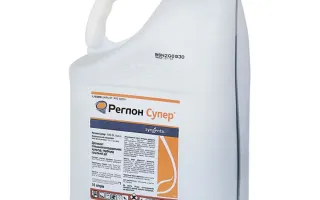
гербицид супер.



Herbicides, Desiccants
Syngenta
A powerful two-component systemic herbicide for corn that delivers superior control of difficult grasses and broadleaf weeds.
When corn fields face intense pressure from perennial grasses or difficult broadleaf weeds, time is against the agronomist. Syngenta offers a game-changing solution: Elumis OD, an oil dispersion formulation. What makes it fundamentally different from traditional tank mixes? It lies in the synergy of two active ingredients—nicosulfuron and mesotrione—packaged into a unique, highly stable formulation.
The core strength of the product lies in its systemic action. Mesotrione blocks photosynthesis, while nicosulfuron halts cell division. Together, they don't just provide an additive effect; they actively reinforce each other, enabling control over challenging targets like quackgrass, ragweed, and field bindweed. The oil-based formulation ensures superior droplet adhesion to waxy weed surfaces and faster penetration, which is critical during dry spring conditions.
Elumis OD is ideal for high-yield farming operations where weed competition is the primary limiting factor. It is the perfect choice for professionals who prefer to avoid the hassle of building complex tank mixes and the inherent risks of component incompatibility. Note: A strict limit of one application per season ensures effective resistance management, requiring a precise assessment of the weed growth stage to achieve the best possible ROI.
|
By application method
By application method
Based on the method of application, herbicides are divided into foliar, soil, and root herbicides. Foliar herbicides are applied to vegetative plants and act through their above-ground organs. The main method of application for such preparations is spraying using sprayers or airp... |
|
|---|---|
|
By Mode of Action
By Mode of Action
Herbicides are divided into two groups according to their mode of action: Non-selective herbicides — intended for the destruction of all plant species. They are applied in agricultural fields during the absence of the main crop (after harvest, before crop emergence, on fallow lan... |
|
|
By Application Timing
By Application Timing
Herbicides are classified according to application timing into pre-emergent and post-emergent herbicides. Pre-emergent herbicides are mostly soil-applied or granular formulations applied before the emergence of crop plants. They are applied either pre-sowing (during pre-sowing cu... |
|
| Form of the preparation | |
|
By type of action
By type of action
Depending on their ability to move through living tissues, herbicides are divided into contact and systemic. Contact herbicides cause local damage to plant tissue upon contact, which dies or gradually degrades. This action does not always completely destroy the plant; often, its... |
|
|
Drug Consumption
Drug Consumption
Mass of the preparation per unit of treated area. It is customary to express the dosage rate in kilograms per hectare. The dosage rate is most often given in terms of 100% active ingredient, although sometimes it is calculated based on the preparation in the form of application w... |
1.25-1.5 |
|
Maximum number of treatments
Maximum number of treatments
Maximum recommended number of treatments per vegetation period. |
1 |
| Danger Class | 3 |
| Catalog | Catalog → Herbicides, Desiccants |
| Manufacturer | Syngenta |
| Country | Switzerland |
Aggregator catalog: prices are collected automatically from store websites, normalized by AI and converted at the current exchange rate. Before ordering, confirm the price and availability on the store's website. This block is not indexed by search engines — the data is loaded after the page opens.
Corn · similar varieties


Often considered together with this variety




Similar items in this catalog section



Comments · 1