


SKU #249
·
4 265 views
Granstar Gold 75
Herbicides, Desiccants
DuPontUser rating
3 votes67% positive reviews
No ratings yet — be the first.
Last Processing Date, Days
1
By type of action
Systemic herbicide
By Mode of Action
Selective herbicide
By Application Timing
Post-emergence herbicide
About product

Reliable systemic control of thistle and broad-leaved weeds in wheat and barley crops with minimal application rates.
Last Processing Date, Days
1
By type of action
Systemic herbicide
By Mode of Action
Selective herbicide
By Application Timing
Post-emergence herbicide
Description
Advanced weed control for cereal crops
When winter wheat or barley fields face heavy pressure from Canada thistle or cleavers, agronomists require a high-precision solution. Granstar Gold 75 by DuPont is the industry standard for those who prioritize field hygiene and yield potential. This systemic herbicide operates by blocking weed development at the cellular level, ensuring consistent results even under fluctuating weather conditions.
Practical application in the field
The primary function of this product is the post-emergence control of broad-leaved weeds. A key advantage of Granstar Gold 75 is its selectivity: the crop remains unaffected and continues its vegetative growth while competing weeds are eliminated. Practical field scenarios include:
- Perennial weed management: Highly effective against Canada thistle, a notoriously difficult weed to eradicate mechanically.
- Early-stage protection: Robust control of common lambsquarters and cleavers, which is essential during the tillering phase of cereals.
- Cost-efficiency: Low application rates (up to 25 grams/ha) significantly reduce logistics and inventory costs.
The product is formulated as water-dispersible granules that dissolve easily, preventing sprayer nozzle clogging. As a systemic herbicide, it performs best when applied to actively growing weeds. With a low toxicity profile (hazard class 3) and a pre-harvest interval of just one day, it is a versatile tool for intensive crop management.
Why trust DuPont
Choosing this herbicide means choosing predictability. A single application per season is all it takes to keep fields clean. Unlike generic alternatives, the original DuPont product ensures the crop avoids growth stress, allowing the plant to focus its energy on grain filling and quality. Incorporating Granstar Gold 75 into your crop protection strategy is an investment in minimizing competition and maximizing agricultural output.
Composition
Active ingredients
- Thifensulfuron-methyl гербицид Производные сульфонилмочевины
- Tribenuron-methyl гербицид Производные сульфонилмочевины
Application
Used on crops
Specifications hover over for a hint about the specification
|
Last Processing Date, Days
Last Processing Date, Days
Number of days from processing to harvest cleanup |
1 |
|---|---|
|
By type of action
By type of action
Depending on their ability to move through living tissues, herbicides are divided into contact and systemic. Contact herbicides cause local damage to plant tissue upon contact, which dies or gradually degrades. This action does not always completely destroy the plant; often, its... |
|
|
By Mode of Action
By Mode of Action
Herbicides are divided into two groups according to their mode of action: Non-selective herbicides — intended for the destruction of all plant species. They are applied in agricultural fields during the absence of the main crop (after harvest, before crop emergence, on fallow lan... |
|
|
By Application Timing
By Application Timing
Herbicides are classified according to application timing into pre-emergent and post-emergent herbicides. Pre-emergent herbicides are mostly soil-applied or granular formulations applied before the emergence of crop plants. They are applied either pre-sowing (during pre-sowing cu... |
|
|
By application method
By application method
Based on the method of application, herbicides are divided into foliar, soil, and root herbicides. Foliar herbicides are applied to vegetative plants and act through their above-ground organs. The main method of application for such preparations is spraying using sprayers or airp... |
|
| Form of the preparation | |
|
Drug Consumption
Drug Consumption
Mass of the preparation per unit of treated area. It is customary to express the dosage rate in kilograms per hectare. The dosage rate is most often given in terms of 100% active ingredient, although sometimes it is calculated based on the preparation in the form of application w... |
Up to 25 g/ha |
|
Maximum number of treatments
Maximum number of treatments
Maximum recommended number of treatments per vegetation period. |
1 |
| Danger Class | 3 |
| Catalog | Catalog → Herbicides, Desiccants |
| Manufacturer | DuPont |
| Country | USA |
Store offers · 10 from 9 stores
Prices are updated on loadLoading offers…
Aggregator catalog: prices are collected automatically from store websites, normalized by AI and converted at the current exchange rate. Before ordering, confirm the price and availability on the store's website. This block is not indexed by search engines — the data is loaded after the page opens.
Alternatives
Winter barley · similar varieties




See also
Often considered together with this variety




Recently viewed
Similar items in this catalog section


Stomp 330
БАСФ Агро БВ, Швейцарія, на заводі , Франція,Італія (Сієна)
From your browsing history
710.8K 14 offers
13.2 €за 1 л ≈ 674 ₴


Lazurit
ЗАТ Фірма Август, Росія.,селище Вурнари,
From your browsing history
39.1K 11 offers
6.4 €за 1 л ≈ 327 ₴


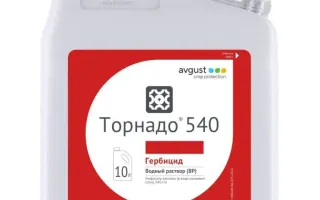
Tornado
ЗАТ Фірма Август, Росія.,селище Вурнари,
From your browsing history
57.8K 8 offers
0.8 €за 1 л ≈ 41 ₴

Comments · 0