
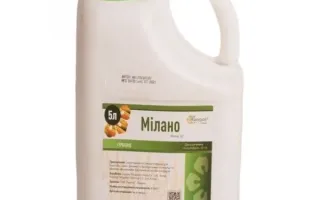

SKU #20193
·
50 views
Mayalis Protect
Herbicides, Desiccants
Hangzhou Ruijiang Chemical Co., Ltd.User rating
0 votes0% positive reviews
No ratings yet — be the first.
Form of the preparation
Suspension concentrate
Danger Class
3
By type of action
Systemic herbicide
By application method
Foliar herbicide
About product

A powerful systemic herbicide for post-emergence control of grass and broadleaf weeds in corn crops.
Form of the preparation
Suspension concentrate
Danger Class
3
By type of action
Systemic herbicide
By application method
Foliar herbicide
Description
Reliable Weed Control in Corn Fields
When corn crops start struggling with invasive weeds like couch grass or green foxtail, you need a solution that works without complex protocols. "Mayalis Protect" by Hangzhou Ruijiang Chemical Co., Ltd. is a straightforward tool for field maintenance. As a systemic herbicide based on nicosulfuron, it functions with high efficiency: it is absorbed through the leaves and quickly shuts down weed growth, preventing them from recovering.
Operational Insights
- Selective Action: Corn remains safe, while the broad spectrum of grass and broadleaf weeds (like pigweed, mustard, or shepherd's purse) stops growing within hours of application.
- Suspension Concentrate: The formulation makes it easy to measure and mix the solution in the sprayer tank without settling or clogging issues.
- Systemic Efficacy: Unlike contact herbicides, this product reaches the weed’s growth points, effectively eliminating even those plants where the spray only hit part of the surface.
For agronomists who value predictability, this product is ideal as a post-emergence tool. When you spot the weeds after corn germination, you make your move. One single treatment per season is typically sufficient to eliminate competition for moisture and nutrients during the crop's critical growth stages. Given its Class 3 toxicity rating, standard safety measures during application are required. Distributed by Sidera-Agro, this selective herbicide helps keep your fields clean with minimal labor, making it a reliable choice for professional agricultural management.
Composition
Active ingredients
- Nicosulfuron гербицид Производные сульфонилмочевины
Application
Used on crops
Specifications hover over for a hint about the specification
| Form of the preparation | |
|---|---|
| Danger Class | 3 |
|
By type of action
By type of action
Depending on their ability to move through living tissues, herbicides are divided into contact and systemic. Contact herbicides cause local damage to plant tissue upon contact, which dies or gradually degrades. This action does not always completely destroy the plant; often, its... |
|
|
By application method
By application method
Based on the method of application, herbicides are divided into foliar, soil, and root herbicides. Foliar herbicides are applied to vegetative plants and act through their above-ground organs. The main method of application for such preparations is spraying using sprayers or airp... |
|
|
By Mode of Action
By Mode of Action
Herbicides are divided into two groups according to their mode of action: Non-selective herbicides — intended for the destruction of all plant species. They are applied in agricultural fields during the absence of the main crop (after harvest, before crop emergence, on fallow lan... |
|
|
By Application Timing
By Application Timing
Herbicides are classified according to application timing into pre-emergent and post-emergent herbicides. Pre-emergent herbicides are mostly soil-applied or granular formulations applied before the emergence of crop plants. They are applied either pre-sowing (during pre-sowing cu... |
|
|
Maximum number of treatments
Maximum number of treatments
Maximum recommended number of treatments per vegetation period. |
1 |
| Catalog | Catalog → Herbicides, Desiccants |
| Manufacturer | Hangzhou Ruijiang Chemical Co., Ltd. |
| Applicant | Сидера-Агро |
| Country | China |
Store offers
Prices are updated on loadLoading offers…
Aggregator catalog: prices are collected automatically from store websites, normalized by AI and converted at the current exchange rate. Before ordering, confirm the price and availability on the store's website. This block is not indexed by search engines — the data is loaded after the page opens.
Alternatives
Corn · similar varieties


Maro
Superus Co., Ltd., Китай, Yangzhou Pioneer Chemical Co., Ltd., Китай
01.6K 2 offers
0.83 € ≈ 42 ₴


See also
Often considered together with this variety




Recently viewed
Similar items in this catalog section


Stomp 330
БАСФ Агро БВ, Швейцарія, на заводі , Франція,Італія (Сієна)
From your browsing history
710.8K 14 offers
13.2 €за 1 л ≈ 674 ₴


Lazurit
ЗАТ Фірма Август, Росія.,селище Вурнари,
From your browsing history
39.1K 11 offers
6.4 €за 1 л ≈ 327 ₴


Tornado
ЗАТ Фірма Август, Росія.,селище Вурнари,
From your browsing history
57.8K 8 offers
0.8 €за 1 л ≈ 41 ₴

Comments · 0