


SKU #20903
·
41 views
Zernodar, WG, herbicide
Herbicides, Desiccants
Бадвасі, ТОВUser rating
0 votes0% positive reviews
No ratings yet — be the first.
Form of the preparation
Water-soluble granules
Drug Consumption
Up to 25 g/ha
Danger Class
3
By type of action
Systemic herbicide
About product

Systemic post-emergence herbicide based on tribenuron-methyl for effective broadleaf weed control in cereal crops.
Form of the preparation
Water-soluble granules
Drug Consumption
Up to 25 g/ha
Danger Class
3
By type of action
Systemic herbicide
Description
Mechanism of Action and Selectivity
"Zernodar, WG" by Badvasi is formulated on the basis of tribenuron-methyl, a sulfonylurea herbicide. Its systemic action works by inhibiting the acetolactate synthase (ALS) enzyme in sensitive weeds. For an agronomist, this means an immediate halt to cell division in weed growth points, effectively stopping competition with winter or spring wheat and barley for nutrients and moisture within hours of application.
The Advantage of WG Formulation
The product is supplied as water-dispersible granules (WG). Unlike powders, this formulation significantly reduces dust generation, enhancing operator safety and ensuring cleaner spray tanks. These granules disintegrate rapidly in water, creating a homogenous solution that ensures uniform coverage even at low application rates of up to 25 g/ha.
Control Spectrum and Practical Application
"Zernodar" is highly selective for small-grain cereals, making it an ideal post-emergence herbicide. It provides robust control against a wide array of broadleaf weeds, including challenging species:
- Cirsium arvense (Canada thistle) and Galium aparine (cleavers).
- Matricaria inodora (scentless chamomile) and Chenopodium album (lambsquarters).
- Stellaria media (common chickweed), Thlaspi arvense (field pennycress), and Capsella bursa-pastoris (shepherd's purse).
- Lamium purpureum (purple dead-nettle).
The systemic nature of the herbicide allows the active ingredient to translocate rapidly through the phloem and xylem, which is essential for controlling more mature weeds. The optimal application window is during the active growth phase of the weeds when metabolic activity is at its peak.
Technical Considerations
Classified as hazard class 3, the product requires standard safety precautions. The label recommends one application per season. Due to its selective action, cereal crops metabolize tribenuron-methyl rapidly, preventing phytotoxicity when application rates are strictly followed.
Composition
Active ingredients
- Tribenuron-methyl гербицид Производные сульфонилмочевины
Application
Used on crops
Specifications hover over for a hint about the specification
| Form of the preparation | |
|---|---|
|
Drug Consumption
Drug Consumption
Mass of the preparation per unit of treated area. It is customary to express the dosage rate in kilograms per hectare. The dosage rate is most often given in terms of 100% active ingredient, although sometimes it is calculated based on the preparation in the form of application w... |
Up to 25 g/ha |
| Danger Class | 3 |
|
By type of action
By type of action
Depending on their ability to move through living tissues, herbicides are divided into contact and systemic. Contact herbicides cause local damage to plant tissue upon contact, which dies or gradually degrades. This action does not always completely destroy the plant; often, its... |
|
|
By application method
By application method
Based on the method of application, herbicides are divided into foliar, soil, and root herbicides. Foliar herbicides are applied to vegetative plants and act through their above-ground organs. The main method of application for such preparations is spraying using sprayers or airp... |
|
|
By Mode of Action
By Mode of Action
Herbicides are divided into two groups according to their mode of action: Non-selective herbicides — intended for the destruction of all plant species. They are applied in agricultural fields during the absence of the main crop (after harvest, before crop emergence, on fallow lan... |
|
|
By Application Timing
By Application Timing
Herbicides are classified according to application timing into pre-emergent and post-emergent herbicides. Pre-emergent herbicides are mostly soil-applied or granular formulations applied before the emergence of crop plants. They are applied either pre-sowing (during pre-sowing cu... |
|
|
Maximum number of treatments
Maximum number of treatments
Maximum recommended number of treatments per vegetation period. |
1 |
| Catalog | Catalog → Herbicides, Desiccants |
| Manufacturer | Бадвасі, ТОВ |
| Country | Ukraine |
Store offers
Prices are updated on loadLoading offers…
Aggregator catalog: prices are collected automatically from store websites, normalized by AI and converted at the current exchange rate. Before ordering, confirm the price and availability on the store's website. This block is not indexed by search engines — the data is loaded after the page opens.
Alternatives
Winter barley · similar varieties


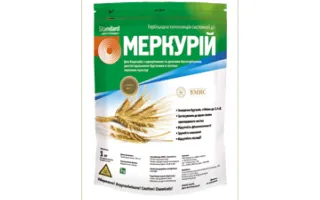

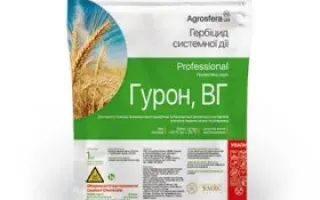

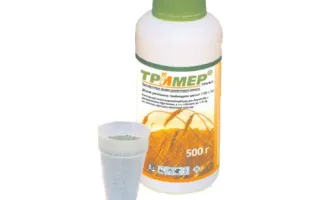

Formula
China National Chemical Construction Ningbo Import & Export Co.
01.4K 7 offers
2.8 €за 1 л ≈ 143 ₴

See also
Often considered together with this variety





Recently viewed
Similar items in this catalog section
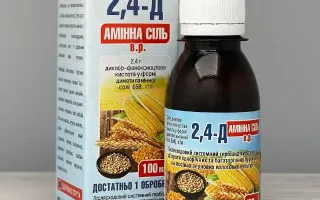


Stomp 330
БАСФ Агро БВ, Швейцарія, на заводі , Франція,Італія (Сієна)
From your browsing history
710.8K 14 offers
13.2 €за 1 л ≈ 674 ₴


Lazurit
ЗАТ Фірма Август, Росія.,селище Вурнари,
From your browsing history
39.1K 11 offers
6.4 €за 1 л ≈ 327 ₴


Tornado
ЗАТ Фірма Август, Росія.,селище Вурнари,
From your browsing history
57.8K 8 offers
0.8 €за 1 л ≈ 41 ₴

Comments · 0