


SKU #24686
·
51 views
Belt 480 SC
Insecticides, Acaricides
Байєр ЛП , СШАUser rating
0 votes0% positive reviews
No ratings yet — be the first.
Form of the preparation
Suspension concentrate
Danger Class
2
Method of Application
Spraying by vegetation
Type of Action
Contact fungicide
About product

A powerful solution for controlling lepidopteran pests with immediate feeding cessation.
Form of the preparation
Suspension concentrate
Danger Class
2
Method of Application
Spraying by vegetation
Type of Action
Contact fungicide
Description
Precision control for lepidopteran pests
In modern agronomy, protecting crops from defoliating pests is a race against time. The «Belt 480 SC» insecticide, manufactured by Bayer LP (USA), is designed for those who need reliable results against stubborn pests like cutworms, bollworms, and moths. It acts as a powerful tool for fields where traditional pyrethroids no longer provide the necessary protection.
Field Application Scenarios
The product is highly effective across a diverse range of crops, including vegetables like cabbage and tomatoes, as well as row crops such as soybeans, sunflowers, and corn. Farmers typically deploy this insecticide when the scouting data shows mass hatching of larvae, prioritizing the preservation of leaf surface integrity.
- Vegetable protection: For crops like cabbage, dealing with the cabbage moth is a constant battle. Belt 480 SC provides the necessary residual control to keep leaf damage minimal.
- Row crops: In soybeans and sunflowers, the meadow moth and cotton bollworm can cause devastating losses. Applying this product during the early larval stages ensures that the plants maintain their photosynthetic capacity.
Operational Practicality
The contact action of Belt 480 SC is its main advantage: as soon as the larva encounters the treated surface, it stops feeding immediately, preventing further crop damage. The suspension concentrate formulation is designed for easy tank mixing and uniform spray distribution. With a maximum of two applications allowed, it is best reserved for high-pressure windows during the vegetation period. The application rate of 0.1–0.15 l/ha is economical, allowing for precise dosage control. As an agronomist, always keep in mind the pre-harvest interval (14–30 days) to ensure regulatory compliance and product safety.
Composition
Active ingredients
- Flubendiamide инсектицид
Application
Against pests
Specifications hover over for a hint about the specification
| Form of the preparation | |
|---|---|
| Danger Class | 2 |
|
Method of Application
Method of Application
Seed treatment — treatment of seeds before sowing. Soil treatment — application of pesticides to soil, for example, in greenhouses. Seed treatment — a preparation used for pre-sowing treatment of seeds of various crops to protect seedlings from plant diseases and pests. In some c... |
|
|
Type of Action
Type of Action
Insecticides are divided into contact, systemic, stomach, and fumigants based on their mode of entry into the organism. Contact insecticides affect insects upon contact with any part of their body, penetrating into their organism through the integument. They are used against pest... |
|
|
Maximum number of treatments
Maximum number of treatments
Maximum recommended number of treatments per vegetation period. |
2 |
|
Drug Consumption
Drug Consumption
Mass of the preparation per unit of treated area. It is customary to express the dosage rate in kilograms per hectare. The dosage rate is most often given in terms of 100% active ingredient, although sometimes it is calculated based on the preparation in the form of application w... |
0.1-0.15 |
|
Last Processing Date, Days
Last Processing Date, Days
Number of days from processing to harvest cleanup |
14-30 |
| Catalog | Catalog → Insecticides, Acaricides |
| Manufacturer | Байєр ЛП , США |
| Applicant | Байєр АГ, Німеччина |
| Country | USA |
Store offers · 10 from 8 stores
Prices are updated on loadLoading offers…
Aggregator catalog: prices are collected automatically from store websites, normalized by AI and converted at the current exchange rate. Before ordering, confirm the price and availability on the store's website. This block is not indexed by search engines — the data is loaded after the page opens.
Alternatives
Cabbage · similar varieties



See also
Often considered together with this variety


Recently viewed
Similar items in this catalog section


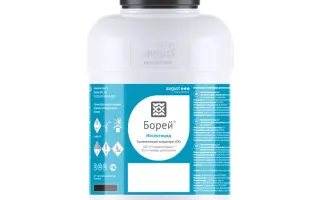
Borey
ЗАТ Фірма Август, Росія.,селище Вурнари,
From your browsing history
27.5K 9 offers
17.6 €за 1 л ≈ 899 ₴


Tabu
ZAT «August-Bel», Republic of Belarus
From your browsing history
45.8K 4 offers
9.8 €за 1 л ≈ 500 ₴


Comments · 0