

Diamondback moth
Plutella xylostella
Description
The diamondback moth (Plutella xylostella) is a small moth of the family Plutellidae, order Lepidoptera. It is considered a global pest of major economic importance, particularly known for its extraordinary ability to develop resistance to almost all classes of synthetic insecticides used in agriculture.
This pest primarily attacks cruciferous crops, including cabbage, cauliflower, broccoli, and oilseed rape. However, its host range is quite broad and may also include crops such as fodder beet, alfalfa, garden peas, potatoes, tomatoes, and occasionally the foliage of domestic apple trees when favorable environmental conditions occur.
The life cycle encompasses four stages: egg, larva, pupa, and adult. Eggs are laid on the undersides of leaves. The larvae progress through four instars, causing progressively more damage as they grow. The duration of the life cycle is highly temperature-dependent, with the potential for multiple generations to occur within a single growing season.
Larval feeding causes distinctive damage, characterized by small, irregular holes in the leaf surface. As the larvae mature, they consume the leaf parenchyma, leaving only the thin epidermal layer, which creates a characteristic "windowing" effect. In severe infestations, the entire leaf can be skeletonized, significantly affecting plant growth and yield.
Management of the diamondback moth requires an integrated approach to avoid resistance development. Key tactics include the use of pheromone traps for monitoring populations, the application of biological controls such as B. thuringiensis, and the strategic rotation of insecticides with different modes of action. Cultural practices, such as removing crop residues and cruciferous weeds, are also vital to disrupt the insect's habitat.
Biology
Taxonomy
- Latin name
- Plutella xylostella
- Order
- Lepidoptera (butterflies)
- Family
- Plutellidae
Taxonomy and Latin: EPPO Global Database · code PLUTMA
Content graph
Damages crops · 10
Контент-граф
Connections · Diamondback moth
Most often together:
Marketplace
Products · 71


Alpha-Super
Agricopeer Asia Limited
Insecticides, Acaricides
0
0
·
2.1K
12 offers
7.7 €за 1 л
Купить


Fox
Ф.Суперус Ко ., Лтд., Гонг-Конг, Шанхай, Китай.
Insecticides, Acaricides
0
0
·
1.1K
1 offer
5.8 €за 1 л
Купить


Nurel D
Доу АгроСайенсіс, Кінг’з-Лінн, Великобританія
Insecticides, Acaricides
0
0
·
65
13 offers
4.9 €за 1 л
Купить


ACTOVERM (ACTOVERM)
TRADE HOUSE "BTU-Center", LLC
Insecticides, Acaricides
0
0
·
61
2 offers
10.6 €за 1 л
Купить


Tor
ТОВ «Фабрика агрохімікатів», Черкаси, Україна
Insecticides, Acaricides
0
0
·
51
1 offer
10.7 €за 1 л
Купить



Break m.e., (lambda-cyhalothrin, 100 g/l)
ЗАТ Фірма Август, Росія.,селище Вурнари,
Insecticides, Acaricides
0
0
·
50
2 offers
2 €за 1 л
Купить


RELDAN 22 EC
Доу АгроСайенсіс, Кінг’з-Лінн, Великобританія
Insecticides, Acaricides
0
0
·
49
4 offers
5 €за 1 л
Купить

VERIMARK
«Дюпон Інтернешнл Оперейшнз Сарл», Швейцарія
Insecticides, Acaricides
0
0
·
47
6 offers
16.5 €за 1 л
Купить

ARMET
«Ред Сан Груп Корпорейшн, Лтд.,Китай
Insecticides, Acaricides
0
0
·
47
5 offers
11.8 €за 1 л
Купить


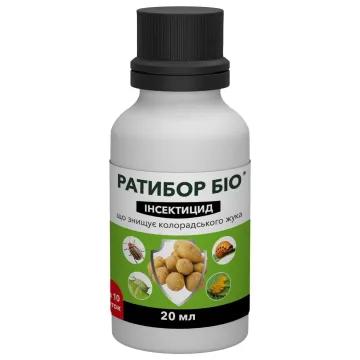
Ratibor w.r.k.
Jiang'an Agrin Company Ltd.
Insecticides, Acaricides
0
0
·
45
2 offers
14.8 €за 1 л
Купить
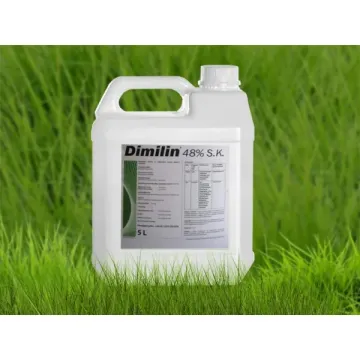
Dimilin
Кемарк КФТ, Угорщи (на замовлення Кемтура Корпорейшн, США)на
Insecticides, Acaricides
0
0
·
45
2 offers
89.6 €за 1 л
Купить

Opercot z.p., (lambda-cyhalotrin, 50 g/kg)
Санрайз Кемікалз Ко. Лтд., Шанхай, Китай
Insecticides, Acaricides
0
0
·
43
2 offers
44 €за 1 л
Купить

Altex 100 I.U.
China Chemical Industrial & Rice Co. Ltd
Insecticides, Acaricides
0
0
·
43
15 offers
0.2 €за 1 л
Купить
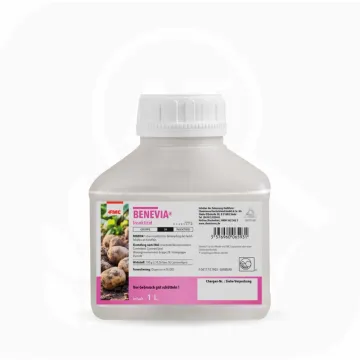
BENEVIA
«Дюпон Інтернешнл Оперейшнз Сарл», Швейцарія
Insecticides, Acaricides
0
0
·
41
4 offers
303.2 €за 1 л
Купить


Tom c.e.
China Chemical Industrial & Rice Co. Ltd
Insecticides, Acaricides
0
0
·
39
1 offer
14.5 €за 1 л
Купить
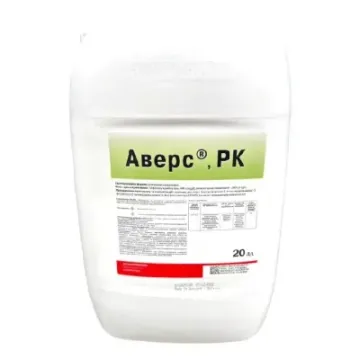
Avers c.e.
Ф.Нанджин Уссенс Файн-Кемікал Ко. Лтд. ,м.Черкаси. Україна.
Insecticides, Acaricides
0
0
·
39
2 offers
3.7 €за 1 л
Купить

Altex 100 i.u., (alpha-cypermethrin, 100 g/l)
China Chemical Industrial & Rice Co. Ltd
Insecticides, Acaricides
0
0
·
38
3 offers
7.1 €за 1 л
Купить


Coragen 20, c.s., (chlorantraniliprole, 200 g/l)
«Дюпон Інтернешнл Оперейшнз Сарл», Швейцарія
Insecticides, Acaricides
0
0
·
37
1 offer
171.8 €за 1 л
Купить

Exirel
«Дюпон Інтернешнл Оперейшнз Сарл», Швейцарія
Insecticides, Acaricides
0
0
·
37
9 offers
122.8 €за 1 л
Купить
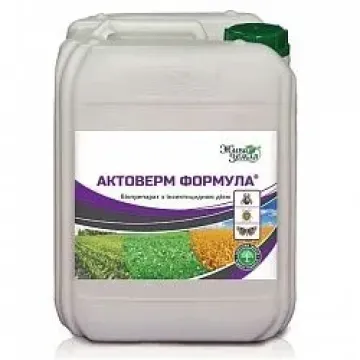


Insecticide FAS, a.e., (Alpha-cypermethrin, 100 g/l)
«Нанджин Ессенс Файн-Кемікал Ко. Лтд» (Китай)
Insecticides, Acaricides
0
0
·
35
6 offers
19.8 €за 1 л
Купить


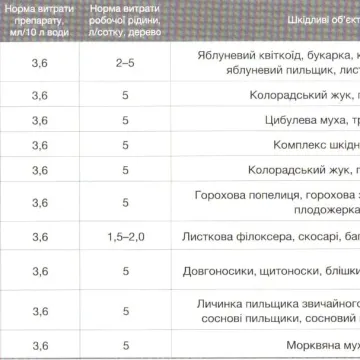

Fas c.e.
«Нанджин Ессенс Файн-Кемікал Ко. Лтд» (Китай)
Insecticides, Acaricides
0
0
·
31
1 offer
38.9 €за 1 л
Купить


Community
Discussion
No discussions yet — be the first.