


SKU #65002
·
51 views
Rainbow
Oats
User rating
0 votes0% positive reviews
No ratings yet — be the first.
Ripeness Group (days)
Medium-maturing (95-110)
Yield
60+
Disease Resistance
Mottling
Mass of 1000 seeds (g)
36-40
About product

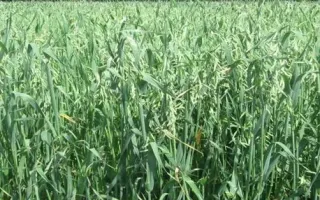
The Rainbow spring oat variety is a mid-ripening hulled type of mutica, intended for cultivation both for grain and green feed. The plant is characterized by plasticity and high adaptability to various soil-climatic conditions, which allows successful cultivation in the Volga-Vyatka, Ural, East Siberian, and Far Eastern regions. The variety's vegetative period ranges from 71 to 92 days; the plant…
Ripeness Group (days)
Medium-maturing (95-110)
Yield
60+
Disease Resistance
Mottling
Mass of 1000 seeds (g)
36-40
Description
The Rainbow spring oat variety is a mid-ripening hulled type of mutica, intended for cultivation both for grain and green feed. The plant is characterized by plasticity and high adaptability to various soil-climatic conditions, which allows successful cultivation in the Volga-Vyatka, Ural, East Siberian, and Far Eastern regions. The variety's vegetative period ranges from 71 to 92 days; the plant is of medium height with an erect bush and resistance to lodging. The mass of 1000 grains varies from 35 to 44 grams, and the grain naturalness reaches 465-565 g/l. Protein content in the grain reaches 14.1%, indicating high quality of feed raw material.
Rainbow is distinguished by good yield: average grain yield in various regions ranges from 14.5 to 35.6 c/ha, and green mass yield calculated on dry matter reaches more than 50 c/ha. The plant has weak pubescence on leaf sheaths and medium-length panicle with drooping ears. The variety is resistant to powdery scab, which increases its reliability in terms of agronomy. Due to its characteristics, spring oat Rainbow is widely used in agriculture as a feed crop for animals, especially for horses and young cattle.
Moreover, spring oat Rainbow is valued for its soil-forming and soil-protecting properties. It effectively improves soil structure, loosens and drains it, increasing air- and water-holding capacity. Oat biomass after decomposition becomes easily digestible organic fertilizer, enriching the soil with humus and improving its phytosanitary condition. The variety contributes to soil health, reducing plant diseases and suppressing weed development, which is particularly important when cultivating acidic bog soils and drained peatlands. Green mass and oat hay are used in mixtures with legume crops to obtain feed of satisfactory quality.
Rainbow is distinguished by good yield: average grain yield in various regions ranges from 14.5 to 35.6 c/ha, and green mass yield calculated on dry matter reaches more than 50 c/ha. The plant has weak pubescence on leaf sheaths and medium-length panicle with drooping ears. The variety is resistant to powdery scab, which increases its reliability in terms of agronomy. Due to its characteristics, spring oat Rainbow is widely used in agriculture as a feed crop for animals, especially for horses and young cattle.
Moreover, spring oat Rainbow is valued for its soil-forming and soil-protecting properties. It effectively improves soil structure, loosens and drains it, increasing air- and water-holding capacity. Oat biomass after decomposition becomes easily digestible organic fertilizer, enriching the soil with humus and improving its phytosanitary condition. The variety contributes to soil health, reducing plant diseases and suppressing weed development, which is particularly important when cultivating acidic bog soils and drained peatlands. Green mass and oat hay are used in mixtures with legume crops to obtain feed of satisfactory quality.
Crop & resistance
Disease resistance
Specifications hover over for a hint about the specification
| Ripeness Group (days) | Medium-maturing (95-110) |
|---|---|
|
Yield
Yield
Overall bulb harvest per unit area. Depends on both onion variety characteristics and agronomic practices, fertilizers, and irrigation. Under optimal growing conditions, an onion yield of 100 tons per hectare and above is not considered record-breaking. |
60+ |
| Disease Resistance | |
| Mass of 1000 seeds (g) | 36-40 |
| Protein (%) | 13+ |
| Grain-oriented | |
| Usage Type | |
| Catalog | Catalog → Oats |
| Originator | Фгбун Федеральный Исследовательский Центр Тюменский Научный Центр Со Ран |
| Country | Russia |
Store offers
Prices are updated on loadLoading offers…
Aggregator catalog: prices are collected automatically from store websites, normalized by AI and converted at the current exchange rate. Before ordering, confirm the price and availability on the store's website. This block is not indexed by search engines — the data is loaded after the page opens.
See also
Often considered together with this variety


Recently viewed
Similar items in this catalog section


Comments · 0