Bell heather
Erica cinerea L.
Description
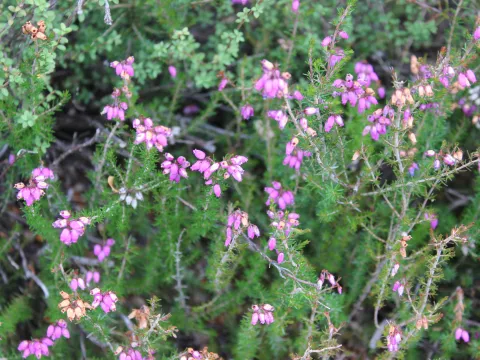
Bell heather (Erica cinerea L.) is a perennial evergreen shrub belonging to the Ericaceae family. Known for its distinct bell-shaped flowers and dense foliage, this species is highly valued in horticulture for its ability to provide vibrant color during the late summer months when many other perennials have faded.
Native to Western and Central Europe, Bell heather naturally thrives in moorlands, heathlands, and coastal areas. It is an extremely hardy plant, adapted to growing in nutrient-poor, acidic, and well-drained soils, making it an excellent candidate for gardens featuring rocky or sandy terrain.
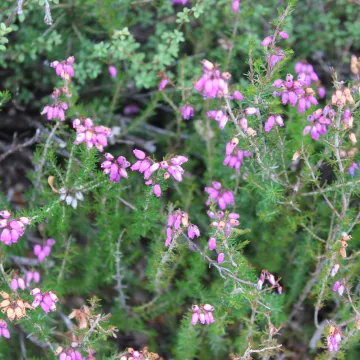
Botanically, the plant is characterized by its compact, low-growing habit, rarely exceeding 60 cm in height. The foliage consists of narrow, greyish-green needles, while the flowers bloom in clusters with colors ranging from deep magenta to vivid purple. These small, waxy blooms are uniquely adapted to withstand cooler, breezy coastal environments.
Agricultural requirements for successful cultivation focus on soil management and site selection. A sunny position is essential, as is a highly acidic substrate (pH 4.5–5.5). Gardeners must ensure excellent soil drainage to prevent root rot. Maintenance includes annual pruning immediately after flowering to encourage dense, bushy growth and prevent the plant from becoming woody and sparse.
Bell heather is considered an important honey plant, attracting bees and pollinators throughout the late summer. While generally robust, the plant is susceptible to fungal issues such as Phytophthora root rot if drainage is inadequate. Pests like spider mites may occur during periods of prolonged hot and dry weather, necessitating careful monitoring and appropriate water management.
Photo gallery