Cornish heath
Erica vagans L.
Description
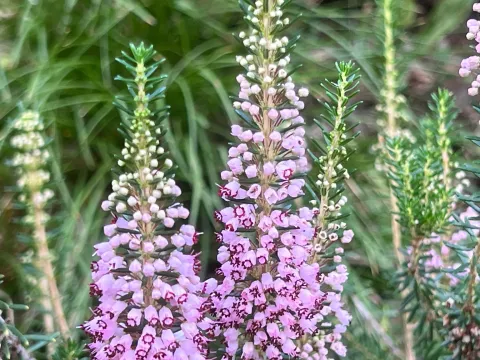
Cornish heath (Erica vagans L.) is an evergreen shrub belonging to the Ericaceae family. Known for its dense, spreading growth habit and vibrant, bell-shaped flowers, this plant is a staple in temperate ornamental gardening, often used to create textured ground covers in specialized heather gardens or rockeries.
The plant is native to Western Europe, particularly common along the Atlantic coasts of Great Britain, Ireland, France, Spain, and Portugal. Its natural distribution is primarily found in heaths, moors, and open, sunny slopes where the soil is naturally acidic and the humidity levels remain relatively high throughout the vegetative season.
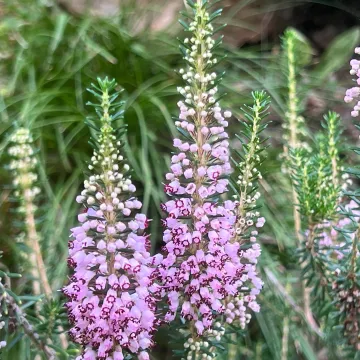
Botanically, Erica vagans is characterized by its woody stems and narrow, whorled leaves that stay green all year round. The plant reaches a height of 20 to 70 centimeters and produces elongated, raceme-like inflorescences. The flowers range in color from white and pale pink to deep purple, blooming steadily from mid-summer through the beginning of autumn.
Cultivation requirements for this species focus on providing an acidic, well-draining soil substrate, typically enriched with peat or organic mulch. It thrives in full sun but prefers locations with good air circulation to prevent the buildup of moisture. Regular watering with soft or rainwater is essential, as the species is highly sensitive to the presence of lime or high pH levels in irrigation water.
Economically and practically, Cornish heath is highly valued for its landscaping versatility and its role in late-season apiculture. As a late-flowering species, it provides a crucial source of nectar for honeybees when other nectar sources are scarce. Its ability to tolerate wind and coastal conditions makes it a reliable choice for gardens in challenging climates.
- Requires annual pruning after flowering to maintain shape.
- Benefits from mulching with pine needles or leaf mold.
- Excellent ground cover for slopes and large borders.
- Low maintenance once established in the correct soil.
Plant health is generally robust, provided that the soil drainage is adequate. Fungal infections, such as root rot, can occur if the plant is waterlogged or lacks proper air circulation. Occasional pests, including spider mites, may appear during prolonged dry spells. Management involves ensuring proper spacing during planting and removing any dead wood to promote healthy regrowth and airflow.
Photo gallery