Besom heath
Erica scoparia L.
Description
Besom heath (Latin Erica scoparia L.) is an evergreen perennial shrub belonging to the Ericaceae family. Known for its structural integrity and height, this plant can grow up to three meters tall, forming dense, woody thickets that are characteristic of specific Mediterranean and Western European landscapes.
The native habitat of this species extends across the western Mediterranean, parts of Atlantic Europe, and North Africa. It typically thrives in regions with mild winters and is commonly found in acidic, sandy, or rocky soils. Its natural distribution is largely defined by its preference for well-drained terrain, often inhabiting heaths and coastal areas.
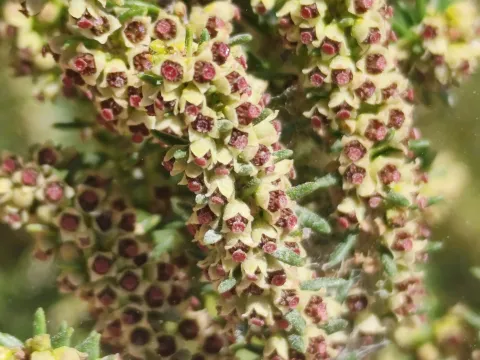
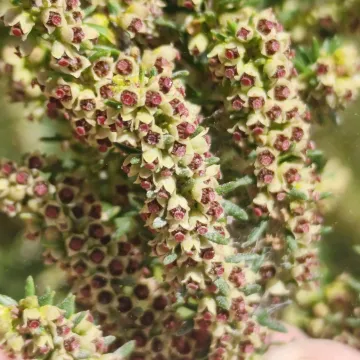
Botanically, Erica scoparia is distinguished by its numerous, stiff, and highly branched stems covered in small, needle-like leaves arranged in whorls. The plant produces dense clusters of small, greenish-yellow to brownish bell-shaped flowers during the late spring. While these blossoms are not as ornamental as other Erica species, they are highly significant for pollinators and local biodiversity.
Cultivation requires specific attention to soil chemistry, as the plant demands acidic conditions and dislikes high calcium levels. Success in growing besom heath depends on providing excellent drainage to prevent root rot. While the plant is drought-tolerant once established, young specimens require consistent irrigation and protection from extreme temperatures to thrive in non-native environments.
In terms of agricultural and industrial use, the plant's name 'scoparia' gives a clue to its primary historical application: the stems were traditionally bundled to create sturdy besoms (brooms) and brushes. Currently, the plant is valued in ecological restoration projects for its ability to stabilize loose, sandy soils and protect slopes from erosion, as well as being a useful resource for apiarists.
- Highly resistant to salt spray, making it suitable for coastal areas.
- Provides excellent habitat for beneficial insects.
- Capable of thriving in nutrient-poor, acidic soils.
- Requires minimal fertilization in naturalized settings.
Photo gallery