
Portuguese heath
Erica lusitanica Rudolphi
Description
Portuguese heath (Erica lusitanica) is a perennial evergreen shrub belonging to the Ericaceae family. Known for its vertical growth habit and early, profuse flowering, it is a highly valued ornamental plant in temperate gardening climates.
The plant is native to southwestern Europe, specifically the Iberian Peninsula. Its natural distribution includes parts of Portugal and Spain, where it thrives in scrublands and coastal areas. Due to its Mediterranean origin, it prefers regions with mild winters and is sensitive to severe frost.
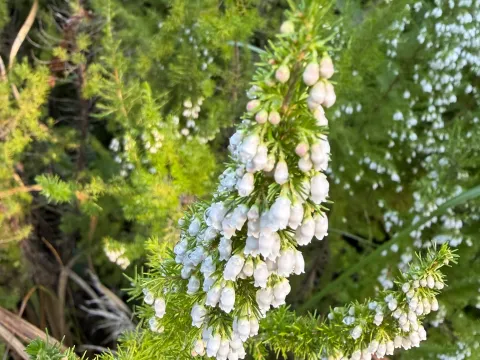
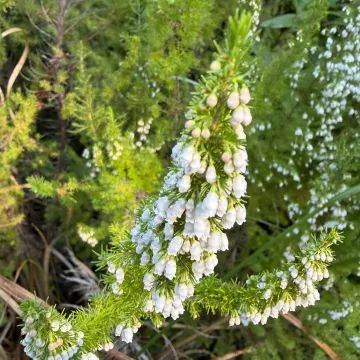
Botanically, this shrub can grow up to 2 meters in height. Its foliage consists of fine, needle-like leaves that are dark green and persist throughout the year. The flowers are small, bell-shaped, and usually white, often flushed with pink, appearing in dense spikes from late winter to mid-spring.
Cultivation requirements demand acidic, sandy, or peaty soils with excellent drainage. Like other members of the heath family, it is intolerant of waterlogging and alkaline conditions. It thrives in full sun or light shade and requires protection from harsh, drying winds that can damage the delicate foliage.
In landscape management, it is primarily used for creating naturalistic borders, rock gardens, and mass plantings. Regular maintenance involves light pruning immediately after the flowering period to maintain a dense, bushy structure and prevent the plant from becoming leggy or overgrown.
While relatively hardy, the plant can suffer from root rot if drainage is insufficient. Common pests that may affect its health include spider mites and aphids, especially during prolonged dry spells. Providing adequate airflow and correct soil moisture are the best preventative measures for maintaining plant health.
Photo gallery