Erica gracilis
Erica gracilis J. C. Wendl.
Description
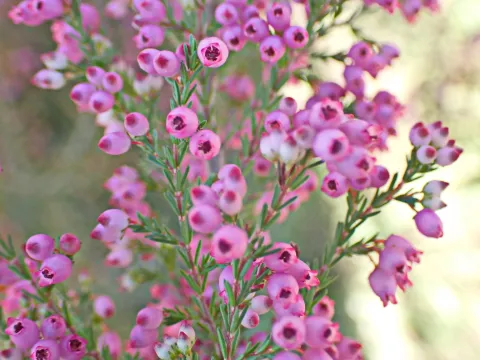
Erica gracilis, commonly known as the slender heather, is a low-growing evergreen shrub belonging to the Ericaceae family. It is highly valued in the horticultural industry for its dense habit and profuse, vibrant flowering during the autumn and early winter months, serving as a staple in ornamental plant production.
Originating from the Cape region of South Africa, the species is adapted to environments with acidic soils and specific moisture levels. While it thrives in its native habitat, its cultivation elsewhere is strictly defined by its requirement for a controlled climate. In most regions, it is grown as a container plant because it lacks winter hardiness in temperate zones.
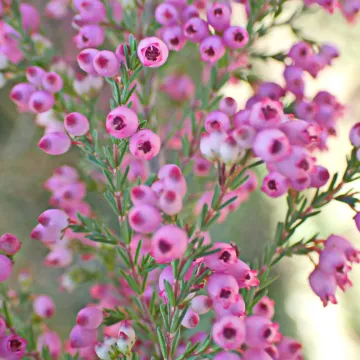
Botanically, Erica gracilis is characterized by small, needle-like leaves and bell-shaped flowers that bloom in clusters at the tips of the stems. The flowers are typically shades of deep pink to red. Its compact growth form makes it an ideal candidate for mass production in greenhouse environments where environmental variables can be precisely managed.
Cultivation requires adherence to strict agrotechnical practices. The most crucial factor is the soil medium; it must be highly acidic (pH 4.0–5.0) and well-draining. The plant is extremely sensitive to calcium and magnesium content in water, necessitating the use of soft or demineralized water. Adequate air circulation and cool temperatures are essential to prevent physiological disorders and pest outbreaks.
- Optimal growth medium: peat-based acidic substrate.
- Watering requirements: consistent moisture with high-quality soft water.
- Propagation: primarily through semi-hardwood cuttings.
- Common pests: spider mites, mealybugs, and aphids.
- Disease prevention: maintaining low humidity around foliage and good airflow.
Economically, Erica gracilis is a significant commercial crop in the seasonal plant market. It is widely used for interior decoration, balcony planting, and as a component in mixed garden displays during the autumn season. Professional growers utilize regulated fertilization programs and specialized growth conditions to ensure uniform, high-quality plants that meet the retail market demands.
Photo gallery