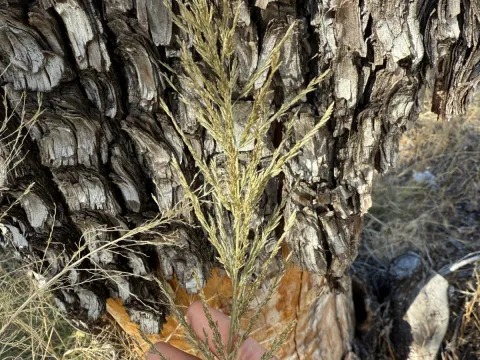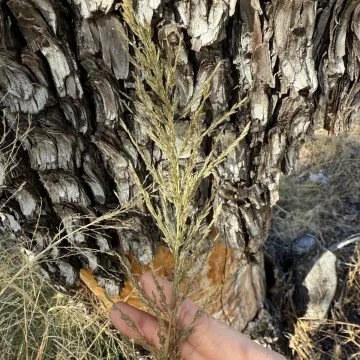
Weeping lovegrass
Eragrostis curvula (Schrad.) Nees
Description
Weeping lovegrass (Eragrostis curvula) is a perennial bunchgrass belonging to the Poaceae family. Recognized for its resilience and high biomass production, this species serves as a vital forage crop in various agricultural systems around the globe, particularly in arid and semi-arid regions.
Native to Southern Africa, the plant has been naturalized in many regions worldwide, including the United States, Australia, and South America. It is extensively cultivated in areas where soil stabilization and drought-resistant forage are primary agricultural priorities for livestock production.
Botanically, it is characterized by its dense, weeping habit with long, slender leaves. One of its most distinctive features is an exceptionally deep and fibrous root system, which allows the plant to thrive in challenging soil conditions and makes it highly effective for preventing soil erosion on marginal land.
The crop is known for its ability to grow on low-fertility, sandy soils, demonstrating remarkable adaptability. Agronomic requirements involve careful seedbed preparation due to the small size of the seeds. Maintaining high productivity requires periodic nitrogen fertilization and strategic grazing or harvesting management to prevent the accumulation of low-quality, stemmy material.
The primary economic uses of Weeping lovegrass include:
- Providing grazing pasture for livestock, particularly cattle.
- Producing hay when harvested at an early maturity stage.
- Soil conservation and land reclamation on disturbed sites.
- Providing cover crops to protect exposed topsoil from erosion.
While generally hardy, the plant can be susceptible to certain grass diseases, such as leaf rust or smut, particularly during humid seasons. Pest management typically focuses on cultural practices, such as maintaining appropriate mowing intervals, which helps keep the plant vigorous and less attractive to common grass-feeding insects.
Photo gallery