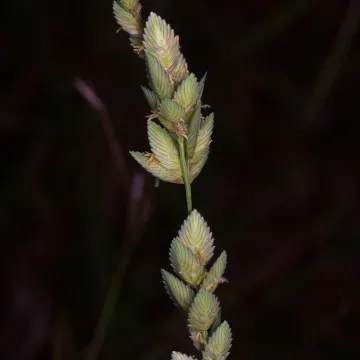
Eragrostis superba
Eragrostis superba Peyr.
Description
Eragrostis superba, commonly known as Sawtooth Lovegrass, is a resilient perennial species within the Poaceae family. Recognized primarily for its robust nature, it serves as a critical forage grass in arid and semi-arid regions. Its ability to maintain structural integrity and nutritional value under environmental stress makes it a preferred choice for land rehabilitation and sustainable grazing management systems.
Native to Southern and Eastern Africa, this grass has adapted to harsh ecological niches ranging from sandy savannas to dry, rocky plains. Its native distribution highlights its evolutionary success in environments where moisture is inconsistent and temperatures are high. Over time, it has become a staple species for range seeding projects intended to restore vegetation in overgrazed or degraded drylands.
Botanically, Eragrostis superba is characterized by its tufted growth habit and dense, fibrous root systems. The foliage is relatively coarse, featuring narrow leaves that help minimize transpiration. The inflorescence is a distinct, large, and showy panicle that sets it apart from other Lovegrass species. The seeds are small and easily dispersed by wind and water, which facilitates natural colonization in suitable habitats.
The agronomic requirements for this species are relatively modest, favoring well-drained sandy or loamy soils. It thrives in full sun and has a very low tolerance for waterlogged conditions, making it unsuitable for heavy clay or poorly drained valleys. While it is highly resistant to drought once established, initial seeding requires clear competition-free ground to ensure sufficient seedling establishment before the onset of extreme seasonal dryness.
In agricultural practice, Eragrostis superba is valued for its versatility in livestock production. It is particularly useful for maintaining year-round ground cover in ranching operations. Notable benefits of this culture include:
- Excellent resilience against heavy grazing pressure.
- Minimal input requirements compared to domesticated forage crops.
- Strong potential for erosion control on slopes and sandy terrain.
- Persistent growth during periods of heat stress when other grasses go dormant.
Photo gallery