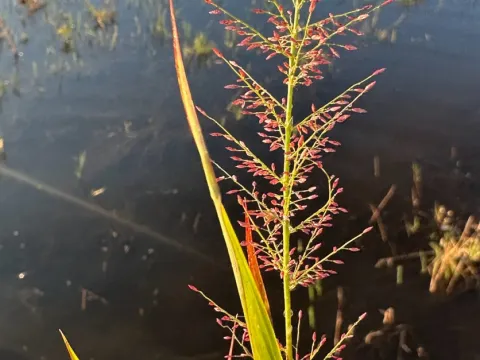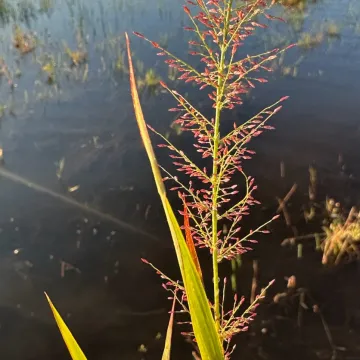

Feather lovegrass
Eragrostis amabilis (L.) Wight & Arn.
Description
Feather lovegrass (Eragrostis amabilis) is an annual grass species belonging to the family Poaceae. In agricultural contexts, this crop is recognized for its rapid growth rate and utility as a forage grass in tropical and subtropical climates, making it a valuable resource for livestock production.
Originating from tropical regions of Africa and Asia, the plant has naturalized globally due to its robust nature and adaptability. It thrives in open, sunny environments and is capable of colonizing various soil types, provided there is adequate warmth during the primary growth cycle.
The botanical structure of the plant features slender, delicate stems and airy, panicle-like inflorescences. This distinct morphology gives the plant a graceful appearance, which is why it is frequently utilized not only in forage production but also in ornamental horticulture and dry floral arrangements.
Regarding cultivation requirements, Feather lovegrass prefers well-drained, sandy or loamy soils. Agronomic management involves surface sowing of seeds in warm conditions and light irrigation to ensure establishment. Once the root system is developed, the plant becomes remarkably efficient at utilizing available moisture.
The primary agricultural use is as a green fodder or hay crop, which is highly appreciated for its palatability. Regarding plant health, the species is generally resilient to pests. However, producers should manage field density to prevent humidity-related fungal diseases, ensuring healthy yield development throughout the season.
- High adaptation to warm climates.
- Rapid biomass production.
- Excellent performance in soil erosion control.
- Versatile use in agriculture and landscaping.
Photo gallery