Hairy lovegrass
Eragrostis pilosa (L.) P. Beauv.
Description
Hairy lovegrass (Eragrostis pilosa) is an annual grass belonging to the Poaceae family. While frequently classified as a weed in diverse cropping systems, it is recognized globally for its ability to thrive in hot, arid conditions, providing a source of forage where other species might fail to establish.
The origin of this species is tropical and subtropical, but it has spread across temperate zones worldwide. It demonstrates a remarkable ability to colonize disturbed areas and is particularly well-adapted to sandy or nutrient-poor soils. Its wide distribution is facilitated by high seed production and effective dispersal mechanisms.
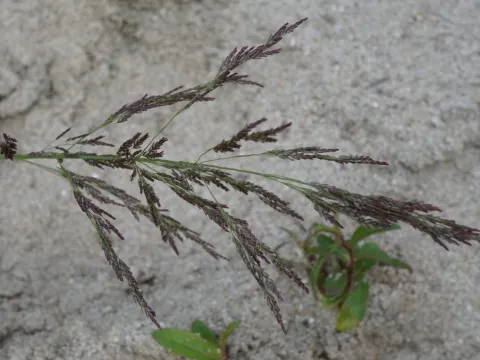
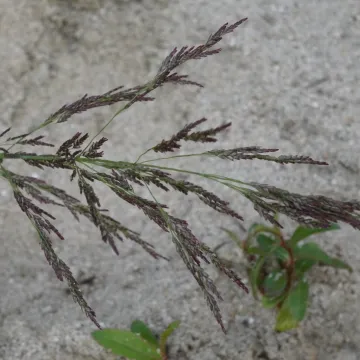
Botanically, Eragrostis pilosa features tufted stems reaching heights of 20 to 70 cm. The inflorescence is a diffuse, open panicle characterized by very thin, hair-like pedicels. The leaves are narrow and often rolled, which serves as a physiological adaptation to reduce transpiration during heatwaves, allowing the plant to remain green under stress.
For successful management, the plant requires well-drained soils and full sun exposure. It is highly heat-tolerant, with germination peaking when soil temperatures rise consistently above 20°C. In agronomic practices, it is often utilized in rotation with other drought-resistant crops to improve soil structure and provide biomass coverage on lands prone to erosion.
Primary uses include forage for livestock, particularly in regions where intensive irrigation is not feasible. The nutritional value is highest before the seed-setting stage. Regarding plant health, Eragrostis pilosa is generally robust, although it may be susceptible to leaf spot diseases and rust fungi if planting density is too high or if the local climate remains humid for extended periods during the growing season.
Photo gallery