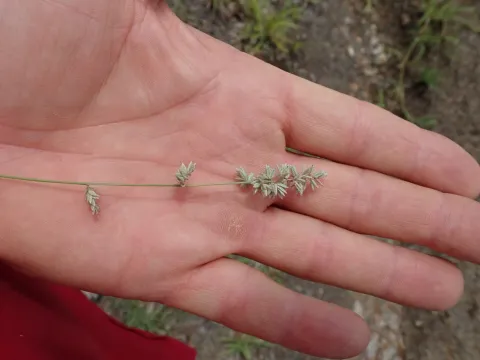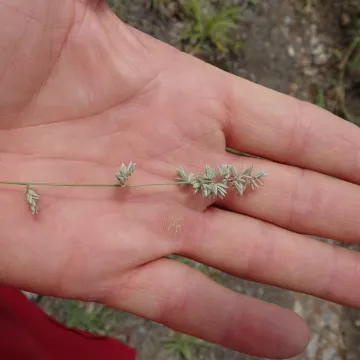
Clustered lovegrass
Eragrostis elongata
Description
Clustered lovegrass (Eragrostis elongata) is a perennial grass belonging to the Poaceae family. In agricultural practices, it is recognized as a hardy forage species capable of thriving in challenging environmental conditions, particularly in areas prone to seasonal waterlogging.
The species is native to Australia and is primarily found in wetland margins, floodplains, and damp pastures. Its natural range demonstrates its ability to colonize specific habitats, which has led to its utilization in land management projects and as a secondary forage crop in similar global ecological zones.
Botanically, this grass grows in dense tufts, reaching heights of up to 90 cm. The leaves are narrow and often exhibit a rolled structure to minimize water loss. The inflorescence is a slender, elongated panicle, which gives the plant its distinct appearance. The root system is fibrous and well-developed, contributing to the plant's structural integrity.
Regarding cultivation requirements, Eragrostis elongata prefers heavy or clay-based soils that provide a reliable moisture supply. It is highly resistant to inundation, making it a suitable candidate for land that is too wet for more sensitive crops. It requires full sunlight to maintain optimal productivity throughout the growing season.
The primary agricultural use of Clustered lovegrass is for cattle grazing and hay production in wetlands. Effective management includes rotational grazing to ensure the plant's health and longevity. Common threats include rust diseases in high-humidity environments, which can be mitigated through proper site selection and maintaining vigorous plant stands.
- Exceptional tolerance to waterlogging.
- Excellent soil-binding properties.
- Low nutrient requirements.
- High biomass production in wet climates.
Photo gallery