Tough lovegrass
Eragrostis plana Nees
Description
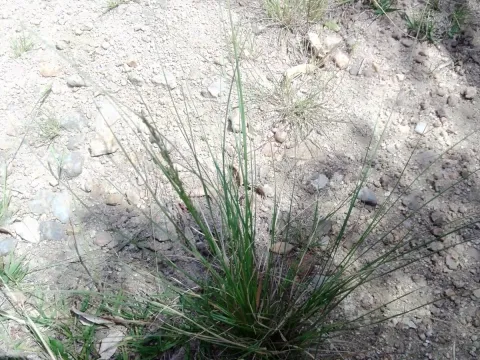
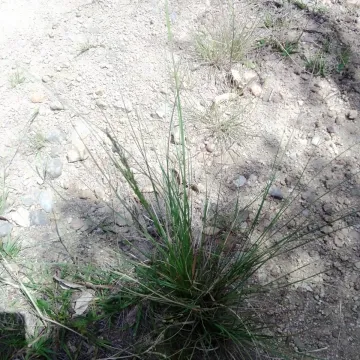
Tough lovegrass (Eragrostis plana) is a perennial grass species belonging to the Poaceae family. It is recognized for its dense tufted growth habit and its ability to withstand challenging environmental conditions, making it a valuable asset for soil stabilization and sustainable livestock grazing.
Native to Southern Africa, this grass has established itself in various global regions characterized by subtropical or temperate climates. It is highly valued for its natural capacity to thrive in regions where rainfall is erratic and where soil fertility may be sub-optimal for more demanding forage species.
Botanically, Eragrostis plana is defined by its stiff, linear leaves and fibrous root system that penetrates deep into the soil profile. The stems are robust, supporting panicle-type inflorescences. This morphology contributes to its remarkable resistance to heavy grazing pressure and physical disturbance by livestock.
Cultivation requirements involve selecting well-drained soils, although the grass is known for its tolerance to soil acidity and low nutrient levels. Agronomic management should focus on careful weed control during the seedling stage, as growth is relatively slow initially. Once established, it forms a persistent sward that requires minimal ongoing maintenance.
The primary economic use is as a reliable forage source for cattle and sheep, providing consistent biomass throughout the growing season. The plant is generally hardy and shows significant resistance to most common diseases and pests that affect commercial pasture grasses, making it a low-input option for large-scale agricultural systems.
Photo gallery