Side-oats grama
Bouteloua curtipendula (Michx.) Torr.
Description
Side-oats grama (Bouteloua curtipendula) is a prominent perennial grass species within the Poaceae family. Renowned for its ecological resilience and nutritional value, it serves as a critical component of native grasslands across North America. The species is highly valued in agriculture for its ability to thrive in harsh environments, providing reliable forage and vital erosion control for diverse soil types.
The native range of this species spans from the southern provinces of Canada through the United States and down into Mexico. It is predominantly found in arid and semi-arid prairies, where it has evolved to survive periods of intense heat and prolonged drought. Its geographical versatility has led to its introduction in various regions worldwide for soil conservation and rangeland improvement projects.
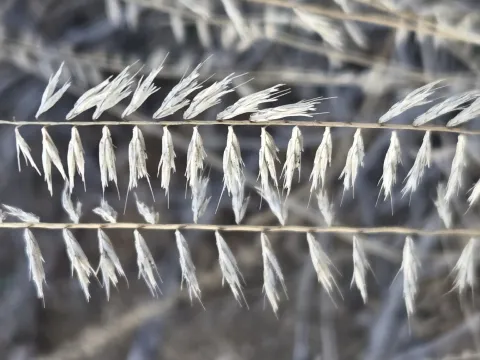
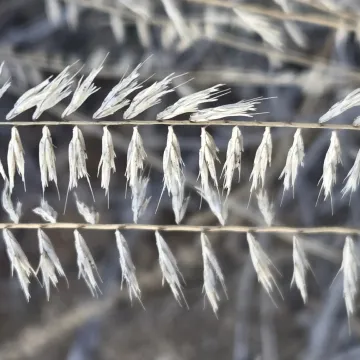
Botanically, Side-oats grama is characterized by its distinct, flag-like inflorescences that hang from one side of the stem, giving the plant its common name. The foliage is typically blue-green, turning to a reddish-bronze shade during the autumn months. It possesses a deep, fibrous root system that not only stabilizes the soil but also allows the plant to access moisture in deeper soil layers when surface water is scarce.
Agronomically, this crop is low-maintenance. It prefers well-drained, neutral to alkaline soils but displays impressive tolerance for rocky and poor-quality substrates. Planting is best achieved in late spring, ensuring that soil temperatures are high enough for rapid germination. Once established, the grass requires minimal intervention, showing high resistance to overgrazing and trampling, which preserves the vigor of the stand for many years.
Primary applications for this species include:
- Quality forage production for cattle, sheep, and horses.
- Erosion control on slopes and disturbed industrial or construction sites.
- Restoration of native prairie ecosystems and biodiversity preservation.
- Sustainable landscaping and xeriscaping due to low water requirements.
Typical plant health issues involve occasional occurrences of fungal rust or ergot in seasons with excessive humidity. However, these infections rarely result in significant yield loss when proper grazing management is employed. Side-oats grama remains a cornerstone of sustainable forage systems, offering a robust and cost-effective solution for agricultural operations seeking stability amidst changing climate conditions.
Photo gallery