Slender grama
Bouteloua repens (Kunth) Scribn.
Description
Slender grama (Bouteloua repens) is a perennial grass species within the Poaceae family, recognized for its resilience in arid and semi-arid environments. It serves as an important component of native grassland ecosystems and has potential applications in sustainable rangeland management.
Originating from the southwestern United States, Mexico, and extending into parts of South America, this grass is well-adapted to hot, dry climates. Its natural habitat includes prairies, rocky slopes, and open woodlands, where it thrives despite irregular rainfall patterns and high evapotranspiration rates.
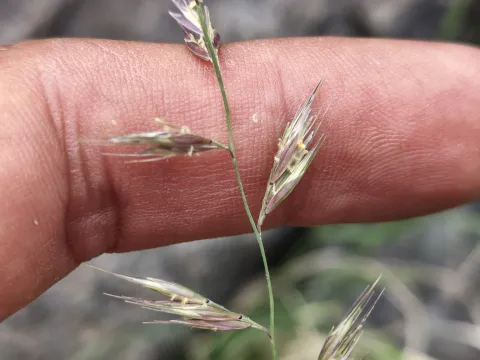
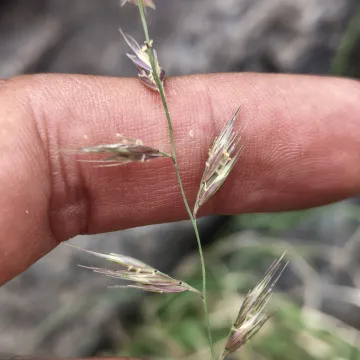
The botanical structure of Bouteloua repens includes slender, stoloniferous stems that may root at the nodes, allowing the plant to spread horizontally. The inflorescences are distinct, featuring several small, comb-like spikes that emerge along the main stalk, typical of the grama grass genus.
Cultivation requirements favor well-drained, coarse-textured soils, such as sands or sandy loams. The plant is drought-tolerant and requires full sun exposure to thrive; it does not tolerate heavy or saturated soils. Proper management includes controlled grazing cycles to ensure the plant maintains its vigor and reproductive capacity.
Economically, this species is utilized for pasture improvement and soil stabilization efforts. It provides nutritious forage for livestock, particularly in arid rangelands where other forage crops struggle to survive. Typical pests and diseases are minimal, provided the plant is maintained under optimal dry-land conditions to avoid fungal pathogens.
Photo gallery