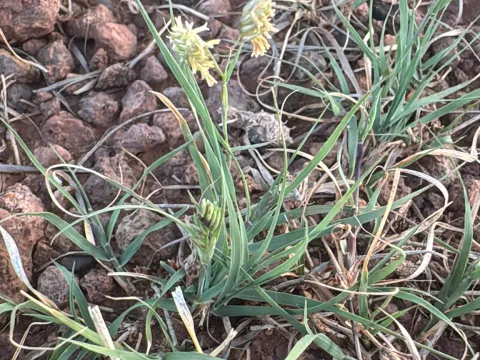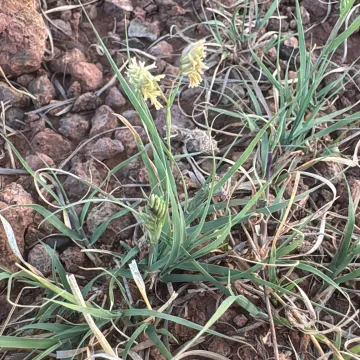
Buffalo grass
Buchloe dactyloides (Nutt.) Engelm.
Description
Buffalo grass (Buchloe dactyloides) is a perennial, low-growing grass species belonging to the Poaceae family. Renowned for its remarkable drought tolerance and low maintenance requirements, it is a key species in xeriscaping and sustainable land management practices throughout its native range in North America.
The origin of this species lies in the Great Plains, where it thrived amidst the grazing pressure of vast bison herds. This evolutionary history has made it exceptionally resilient to grazing, fire, and moisture stress. Today, it is cultivated globally, particularly in arid regions, as a viable alternative to traditional high-water-consumption turfgrasses.
Botanically, Buffalo grass is characterized by its stoloniferous growth habit, forming a dense, fine-textured mat that spreads across the soil surface. It typically reaches heights of only 4 to 6 inches, which significantly reduces the need for frequent mowing. The foliage typically exhibits a distinct grayish-green color during the active growing season.
Regarding cultural requirements, the plant prefers well-drained soil but displays impressive plasticity across various soil types, including clay and heavy loams. It is an obligate sun-loving species; it fails to thrive in shady environments. Agronomic management involves site preparation to eliminate competitive weeds, followed by establishment through seed or sod, with minimal fertilizer inputs required thereafter.
Economic and land-use applications are extensive, ranging from sustainable residential and municipal lawn covers to large-scale range restoration and erosion control projects. Its high protein content and digestibility make it an excellent choice for livestock grazing in areas where other forage grasses struggle to survive during peak summer months.
- Exceptional drought and heat tolerance.
- Low fertilization and irrigation needs.
- Naturally low-growth habit minimizes maintenance.
- Excellent soil stabilization properties.
- High forage quality for grazing ruminants.
Photo gallery