Rothrock grama
Bouteloua rothrockii Vasey
Description
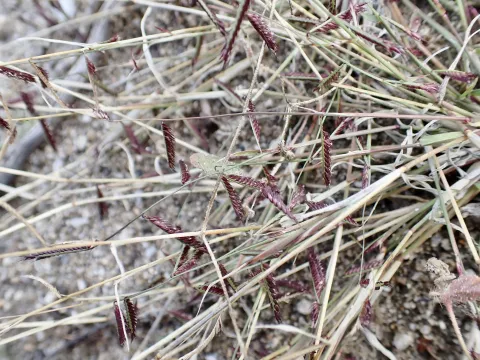
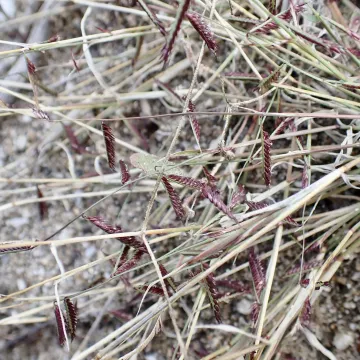
Rothrock grama (Bouteloua rothrockii) is a perennial grass species belonging to the Poaceae family. It is recognized in agriculture as a vital forage plant, specifically adapted to thrive in harsh, arid, and semi-arid environments where water availability is the primary limiting factor for plant growth.
The native range of this species covers the southwestern United States and northwestern Mexico. It is widely utilized in these regions for the restoration of degraded rangelands and as a sustainable component of livestock feed due to its remarkable ability to persist through long periods of heat and drought.
Botanically, it is characterized by its bunch-grass growth habit, which allows it to efficiently utilize ephemeral rainfall. The leaves are narrow and slender, and the plant produces distinct, comb-like spikelets. Its root system is deep and expansive, providing both structural soil support and access to subsurface moisture.
Cultural requirements involve selecting sites with well-drained, sandy, or gravelly soils. It is highly intolerant of waterlogged conditions. Successful establishment requires careful site preparation and management during the initial growth phase, as the seedlings are delicate and may struggle against fast-growing competitive weeds.
The primary agricultural utility lies in grazing management and soil conservation. It provides high-quality forage for sheep and cattle in environments that offer little else. While generally robust, like most grasses, it can be susceptible to:
- Smut and rust fungi under high humidity
- Compaction due to excessive livestock density
- Competition from invasive exotic grasses
Photo gallery