Blue grama
Bouteloua oligostachya (Nutt.) Torr. ex A. Gray
Description
Blue grama (Bouteloua oligostachya), also known scientifically as Bouteloua gracilis, is a perennial warm-season grass in the Poaceae family. It is a cornerstone species of the North American shortgrass prairies, highly regarded for its exceptional nutritional value and its ability to thrive in harsh environments where other grasses might fail.
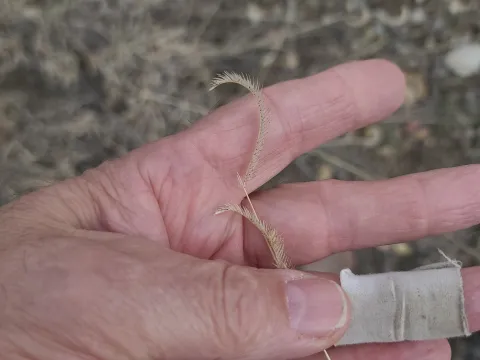
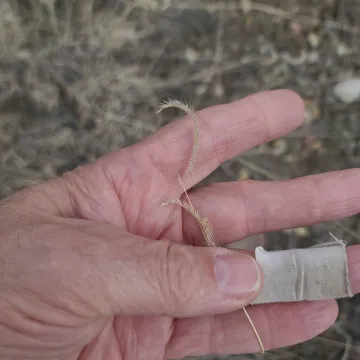
Botanically, the plant is characterized by its tufted growth habit, reaching heights of 15 to 50 cm. The leaves are narrow, grayish-green, and often curled. Its signature feature is the curved, comb-like inflorescence, which is a classic diagnostic tool for identifying this species in the field. The root system is fibrous and deep, which facilitates its extreme drought tolerance.
In terms of climatic and soil requirements, Blue grama is highly adaptable. It excels in full sun and well-drained soils, including rocky or sandy textures. It is significantly drought-resistant, going dormant during periods of extreme water scarcity and quickly resuming growth once moisture is available. Its winter hardiness makes it a reliable choice for cold-temperate climates.
The agrotechnical cycle involves careful land preparation to minimize weed competition during the seedling stage. Since the seedlings are relatively slow to establish, sowing should be timed with the onset of the wet season. Once established, the grass is highly persistent and requires minimal maintenance, as it is naturally optimized for nutrient-poor, arid soils.
Primary agricultural and landscape applications include:
- Forage production for grazing livestock, especially during summer months.
- Soil erosion control and rangeland restoration.
- Integration into low-water xeriscaping and sustainable landscaping.
- Production of high-quality hay for small ruminants.
Regarding health, the plant is generally robust. While susceptible to certain rusts and smuts under specific high-humidity conditions, these rarely cause catastrophic failure. Insect pests such as grasshoppers can cause occasional damage to the foliage, but the grass's regenerative capacity usually allows it to recover well without intensive chemical interventions.
Photo gallery