Sand lovegrass
Eragrostis trichodes (Nutt.) A. W. Wood
Description
Sand lovegrass (Eragrostis trichodes) is a robust perennial bunchgrass belonging to the Poaceae family. Known for its adaptability to sandy soils and harsh environments, it serves as an essential forage species in various rangelands and is widely utilized for land restoration projects due to its persistent growth habit.
Originating from the central and southern regions of the United States, this grass is a native of the prairies. Its natural distribution is largely tied to open, sandy soils where it has developed significant drought tolerance over time. This evolutionary history makes it an excellent candidate for agricultural applications in semi-arid environments where water availability is a limiting factor for traditional forage crops.
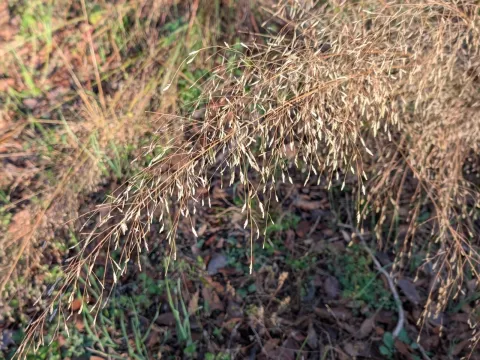
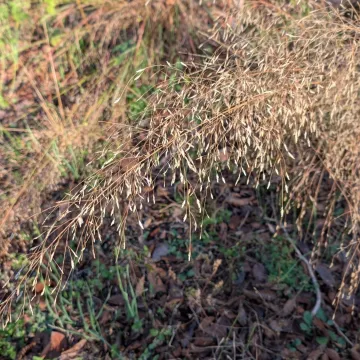
Botanically, Sand lovegrass features upright, slender stems that can grow up to 1.5 meters tall. Its leaves are narrow and basal, while the most distinctive feature is its wide, open, and airy inflorescence, which gives the plant its common name. The deep, fibrous root system allows the grass to anchor itself firmly in sandy substrates, providing stability against erosion.
Regarding cultivation, the crop thrives in full sunlight and well-drained, sandy soils. It does not tolerate waterlogging and performs poorly in heavy clay environments. Successful establishment requires careful site preparation and weed management during the first growing season, as the seedlings are initially slow to develop and can be easily outcompeted by aggressive weeds.
The primary economic uses for Sand lovegrass focus on livestock grazing and hay production. Key aspects of its agricultural utility include:
- Providing high-quality grazing material during the summer months.
- Serving as a foundational grass for stabilizing sandy or erodible soil surfaces.
- Adding biological diversity to rangeland ecosystems.
- Requiring minimal chemical inputs once the stand is fully established.
Despite its hardiness, the crop can be susceptible to common grass diseases such as leaf rust and ergot, particularly during seasons with abnormal rainfall. Additionally, growers should monitor for insect pressure, such as aphids or grasshoppers, which can negatively impact forage quality. Proper grazing management, ensuring the plant is not overgrazed, is crucial for its long-term persistence in the field.
Photo gallery