
Description
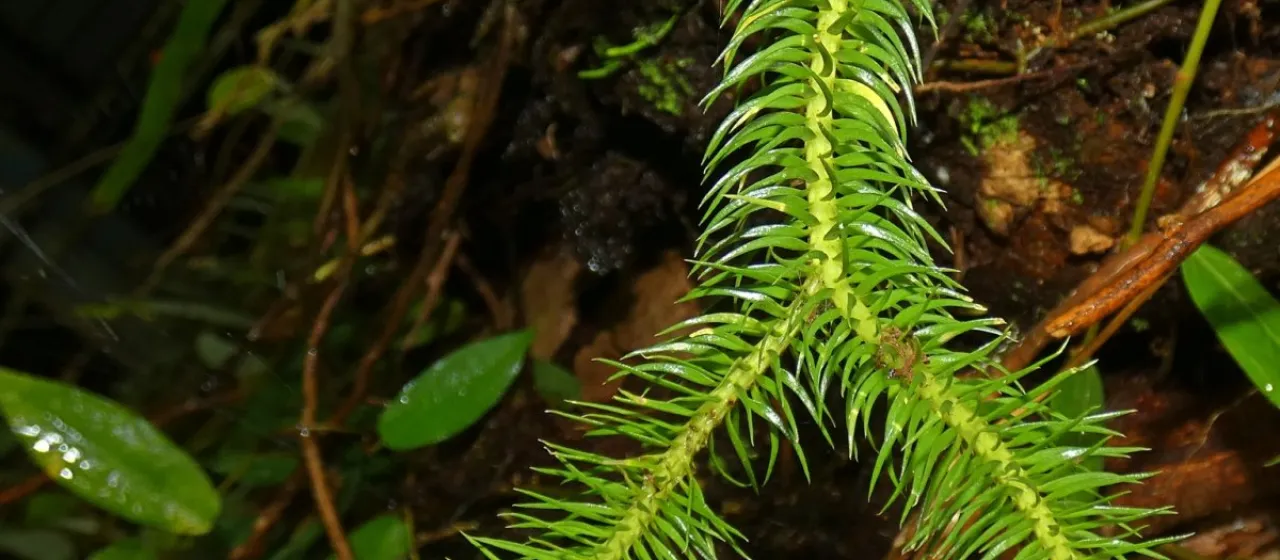
Huperzia squarrosa, commonly known as the tasseled clubmoss, is a fascinating perennial epiphyte belonging to the Lycopodiaceae family. Unlike conventional agricultural crops, this species is highly valued for its ornamental appeal, characterized by its long, cascading, tassel-like stems that create an exotic appearance suitable for specialty botanical collections.
Originating from the tropical rainforests of Southeast Asia, this plant naturally thrives as an epiphyte on trees. Its geographical range covers regions where humidity is perpetually high and temperatures remain warm throughout the year. Understanding this native habitat is essential for any successful cultivation strategy, as the plant remains highly sensitive to its immediate environment.
Botanically, Huperzia squarrosa is defined by its dichotomous branching pattern and dense, needle-like foliage that covers the stems. It reproduces through spores produced in terminal strobili. As an epiphyte, it lacks a robust root system for soil-based nutrient uptake, relying instead on moisture absorption from the air and decaying organic matter collected in the crevices of host trees.
Cultivation requirements for this species are demanding and require a controlled climate. The ideal growth medium is highly porous, typically consisting of shredded bark, sphagnum moss, and perlite. Irrigation must be performed with distilled or deionized water to prevent salt accumulation. Providing high humidity (70%+) and stable, moderate temperatures is critical for preventing physiological stress.
In terms of management and protection, the species faces specific challenges that every cultivator must monitor:
- Infestations of scale insects that hide within dense foliage.
- Fungal pathogens caused by poor air circulation around the root base.
- Dehydration of the tips when environmental humidity fluctuates significantly.
While not a traditional food or fiber crop, Huperzia squarrosa represents a niche category in the ornamental nursery industry. Its slow growth rate and sensitivity make it a specialty plant, primarily cultivated for high-end interior landscaping and botanical display, requiring an experienced approach to maintenance and propagation.