
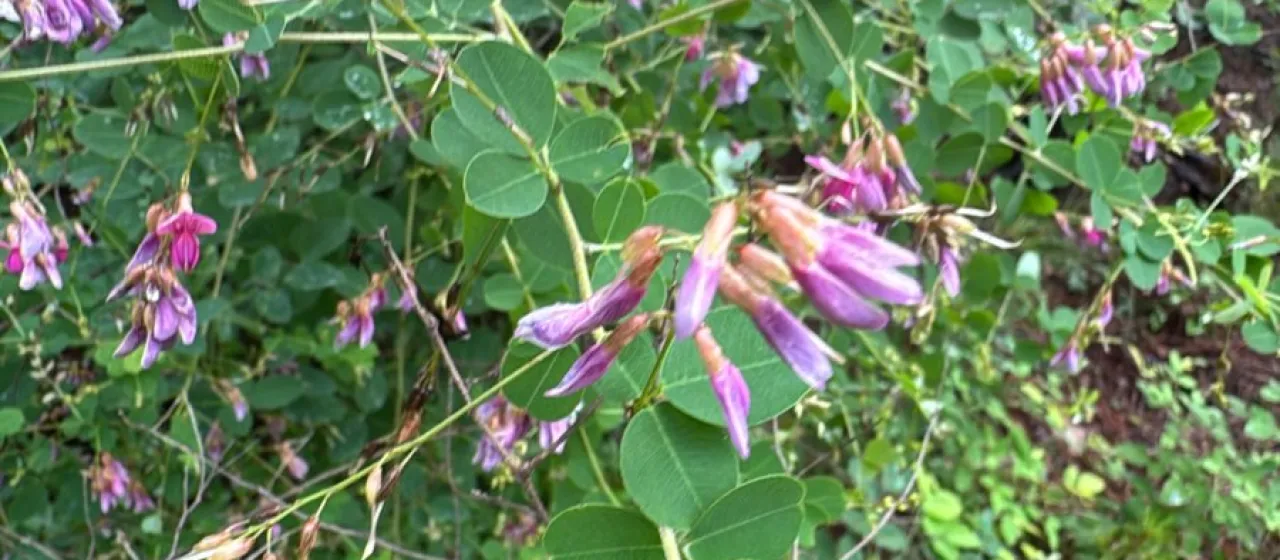
Description
Shrub lespedeza (Lespedeza bicolor) is a perennial deciduous shrub belonging to the Fabaceae family. It is widely recognized in agriculture for its ability to thrive in diverse environments, acting both as a nutritious forage source and as an effective plant for soil stabilization.
Originating from East Asia, including China, Japan, and Korea, this species has been successfully introduced to other temperate regions. Its distribution is favored by its tolerance to various soil types and its biological capacity to thrive in terrains where other forage crops might struggle to establish.
Botanically, this shrub is characterized by its woody base, slender branches, and trifoliate leaves. During the peak of summer, it produces attractive, rosy-purple racemes. Its root system is exceptionally robust, which makes it an ideal candidate for erosion control programs on slopes and degraded lands.
In terms of agricultural requirements, Lespedeza bicolor prefers well-drained soils and full sun exposure. While it is quite drought-tolerant once established, it requires a clean seedbed initially to avoid competition from weeds. Proper site selection and initial maintenance are key to establishing a productive stand.
- Excellent forage source for livestock with high protein content.
- High nectar production, attracting honey bees in late summer.
- Strong nitrogen-fixing capabilities to improve soil fertility.
- Highly effective for controlling soil erosion on hillsides.
- Low maintenance requirements once the crop is established.
The agricultural importance of shrub lespedeza is primarily seen in its dual role as a pasture crop and a conservation tool. Farmers utilize it to improve feed quality for livestock, while the honey industry values the late-season nectar flow. Furthermore, its role in improving soil health through symbiotic nitrogen fixation makes it a valuable asset in sustainable farming.
This crop is generally resistant to most common agricultural pests and diseases. While occasional issues with foliar pathogens or localized insect feeding may occur, the species maintains a strong health profile, reducing the need for intensive chemical inputs compared to more delicate legume crops.