
Description
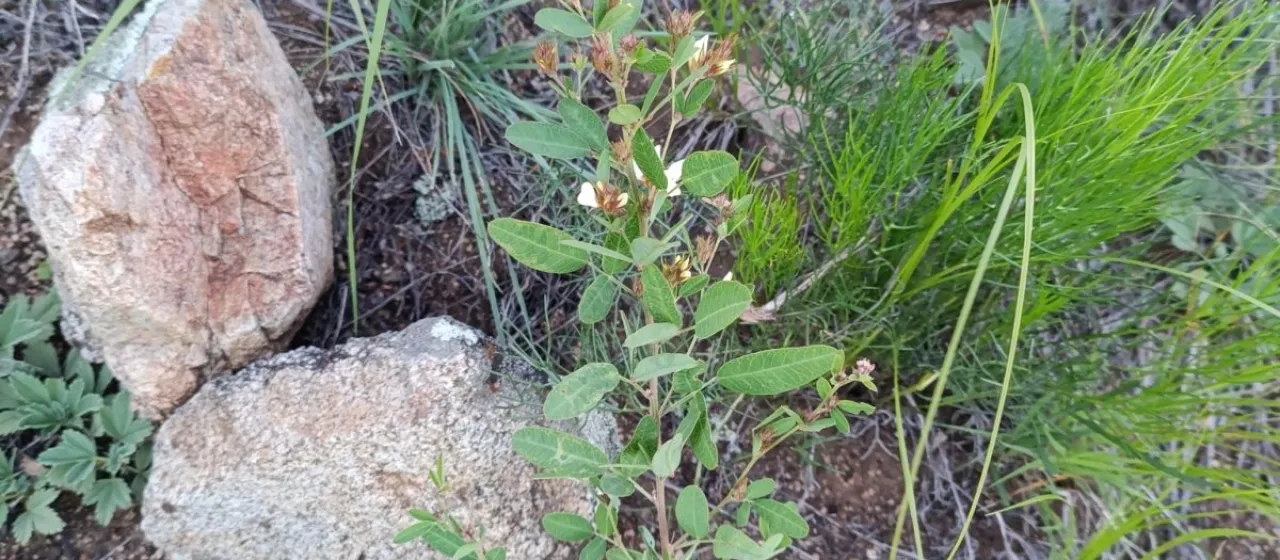
Lespedeza daurica is a perennial herbaceous plant belonging to the Fabaceae family. Often confused with clover due to its appearance, this species is a distinct member of the Lespedeza genus, valued for its remarkable resilience, drought tolerance, and soil-improving properties in challenging environments.
The native range of this plant includes East Asia, specifically areas of Russia, Mongolia, China, and Korea. It typically inhabits dry steppes, mountain slopes, and sandy terrain. Because of its evolution in these harsh conditions, the plant possesses a deep, vigorous root system that allows it to survive in areas where traditional forage crops fail.
Botanically, it presents as a shrubby plant with multiple stems and trifoliate leaves. The plant undergoes a flowering phase during late summer, producing dense clusters of flowers that eventually yield single-seeded pods. Its structural integrity makes it highly resistant to grazing pressure and mechanical stress.
Agronomic requirements focus on well-drained, light-textured soils with full sunlight exposure. Propagation usually requires seed scarification to break dormancy and ensure uniform germination. Once established, the plant is low-maintenance, as it thrives on nitrogen fixation through symbiotic rhizobia, reducing the need for synthetic nitrogen fertilizers.
This crop is primarily used for pasture improvement, hay production, and ecological restoration. Its ability to stabilize soil makes it an excellent choice for erosion control on slopes. Furthermore, it is generally resistant to many common pests and pathogens that affect other legume species, making it a reliable and sustainable component of agricultural systems.
- Excellent protein content for livestock feed.
- High tolerance to arid and semi-arid conditions.
- Superior soil binding capabilities.
- Low requirement for commercial fertilizers.