
Description
Rusty toadflax (Linaria aeruginea) is a perennial herbaceous plant belonging to the Plantaginaceae family. Renowned for its unique copper-toned flowers and low-growing habit, this species is highly valued in botanical gardens and specialized rock garden collections for its distinct aesthetic and resilience.
The native habitat of this species is found primarily in the mountainous regions of the Iberian Peninsula, specifically in Spain. It is highly adapted to rocky slopes, scree, and stony soils, where it has developed an efficient root system capable of extracting nutrients from nutrient-poor environments with minimal precipitation.
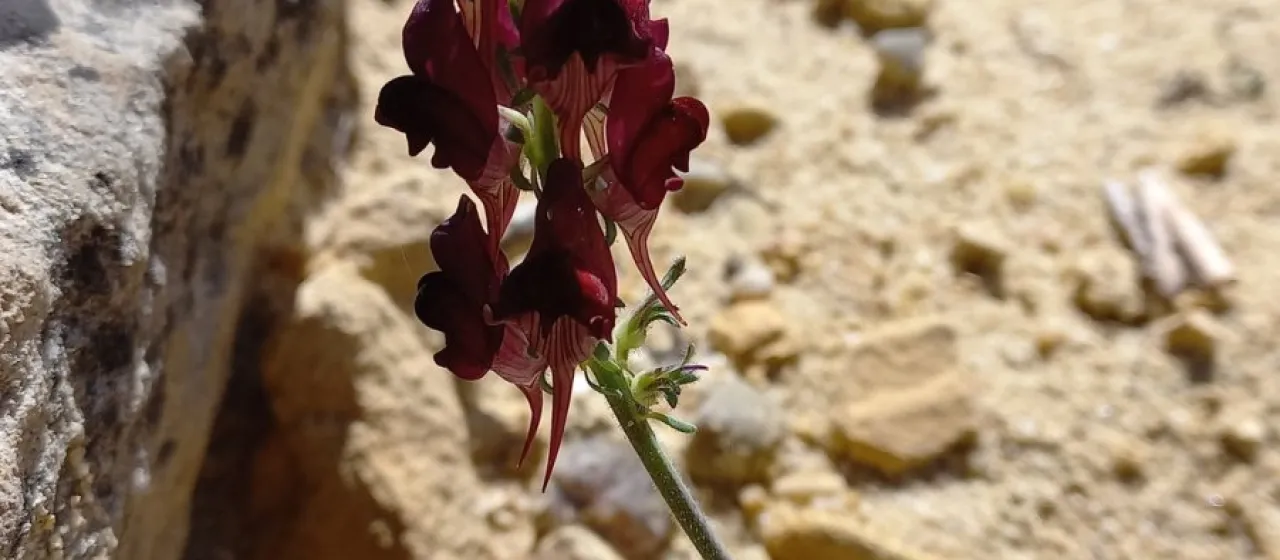
Botanically, the plant features slender, lanceolate leaves arranged along ascending or prostrate stems. The flowers are zygomorphic, bearing a characteristic spur, with a distinct color palette that blends yellow, bronze, and rusty-red hues, reflecting its common name and providing significant visual interest during its bloom cycle.
Regarding climate and soil, the Rusty toadflax requires a location with full exposure to sunlight and gritty, well-draining soil. It is intolerant of heavy, clay-based soils that retain excess moisture, which can cause crown rot. A site with a neutral to slightly alkaline pH is optimal for healthy growth and prolific flowering.
The primary applications for this plant include:
- Rock garden and alpine bed design.
- Xeriscaping and dry garden installations.
- Container gardening in Mediterranean-style settings.
In terms of plant protection, the main challenges include fungal pathogens caused by improper drainage and occasional infestation by small sap-sucking insects. Maintenance should focus on preventing waterlogging and ensuring that the plants are not overcrowded, allowing for sufficient airflow to reduce the incidence of disease.