
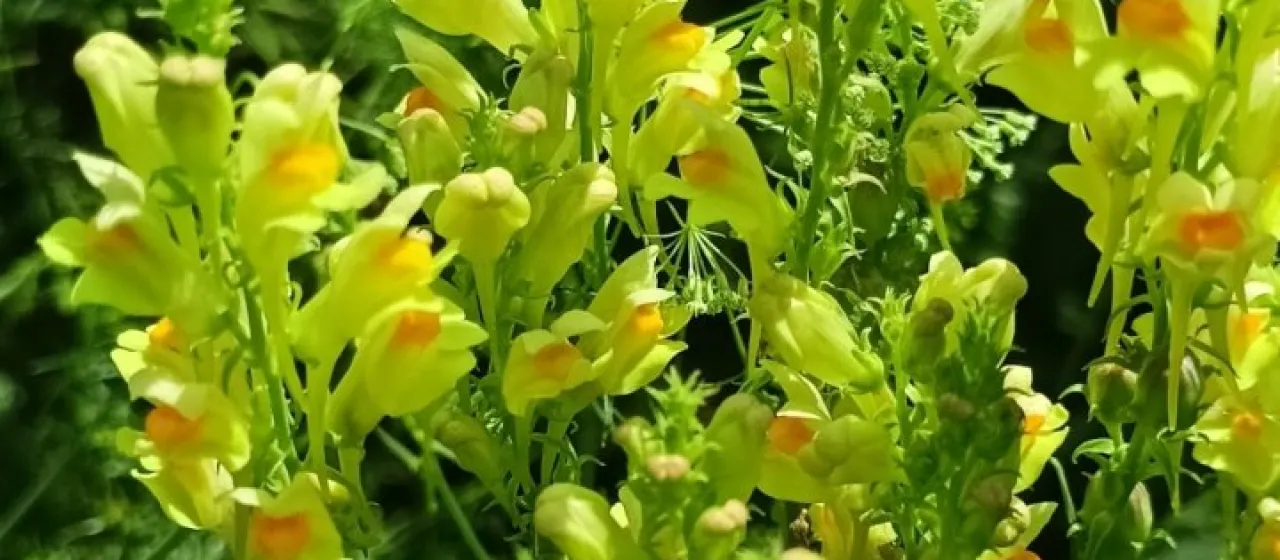
Description
Bieberstein's toadflax (Linaria biebersteinii) is a perennial herbaceous plant belonging to the Plantaginaceae family. Named after the botanist Friedrich August Marschall von Bieberstein, this species is noted for its high adaptation to rigorous steppe conditions and poor soil quality.
The natural range of the plant is primarily concentrated in Eastern Europe, Crimea, and the Caucasus region. In agricultural contexts, it is increasingly studied as a potential crop for semi-arid environments where high-input farming is not feasible or ecologically sound due to soil degradation.
Botanically, it is characterized by its slender, erect stems and linear leaves. The inflorescences are dense terminal racemes consisting of bright yellow flowers with distinct spurs. Its root system is exceptionally deep for its size, allowing for efficient nutrient uptake and anchoring in rocky or sandy substrates.
Regarding agrotechnical requirements, Bieberstein's toadflax thrives in full sunlight and prefers well-drained, neutral to slightly alkaline soils. It is notably drought-resistant and hardy, requiring minimal fertilization and irrigation after the initial establishment phase, making it a low-input agricultural candidate.
Its primary industrial use lies in the pharmaceutical sector, as the plant contains secondary metabolites that are of interest for chemical research and herbal medicine. Furthermore, it is valued for soil conservation purposes, as its root architecture helps prevent soil erosion on steep slopes and marginal farmlands.