
Description
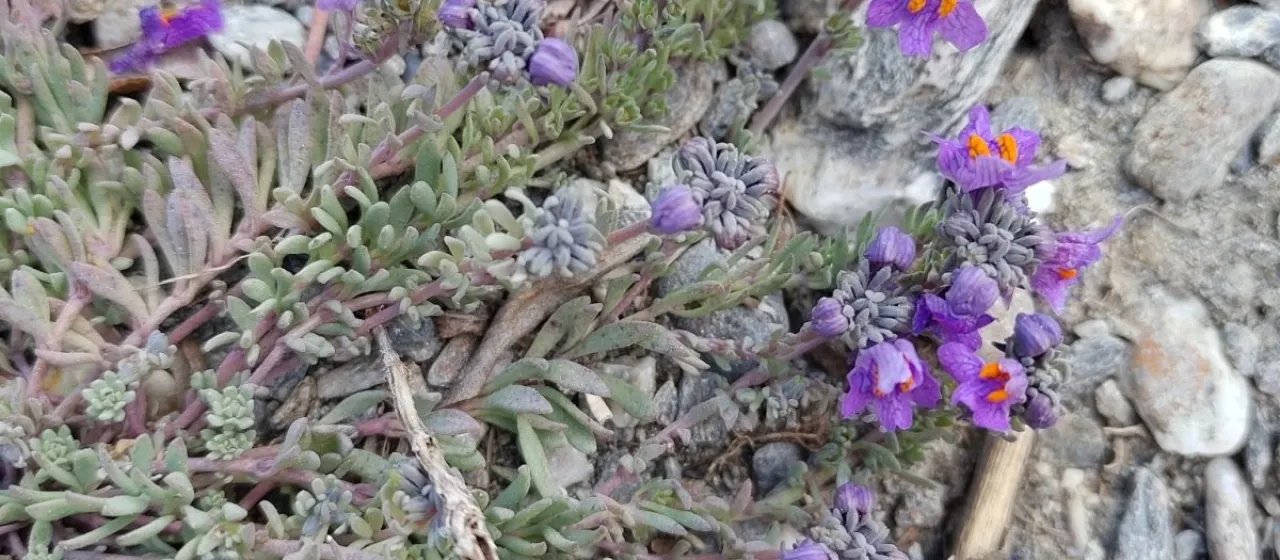
Alpine toadflax (Linaria alpina) is a perennial herbaceous plant belonging to the Plantaginaceae family. This species is highly valued for its miniature growth habit and vibrant, multicolored flowers, which make it a quintessential choice for rock gardens and alpine installations globally.
Native to the high-altitude mountain regions of Central and Southern Europe, the plant typically grows in rocky habitats, scree slopes, and limestone debris. This rugged background defines its ecological needs, primarily focusing on extreme drainage, high exposure to sunlight, and minimal competition from other vegetation.
Botanically, it forms dense mats of glaucous, narrow leaves. The flowers are notable for their distinct shape, featuring a nectar spur and a bicolor appearance, typically dominated by shades of violet combined with a striking orange or yellow palate. The roots are deep-seated, allowing the plant to anchor securely in rocky crevices.
Cultivation requirements are strict regarding soil composition. It requires alkaline, poor, and highly porous soil. In garden settings, it is often necessary to mix soil with crushed stone or grit to replicate the scree conditions of its homeland. Regular watering should be avoided after the establishment phase, as constant moisture leads to rapid root decay.
In terms of usage, it is strictly an ornamental species employed in rockeries, stone walls, and xeriscaping. The primary health threats are fungal pathogens such as powdery mildew and root rots, which often develop during periods of high humidity or poor aeration. Proper placement ensures that the plant remains healthy and thrives in its specialized environment.