
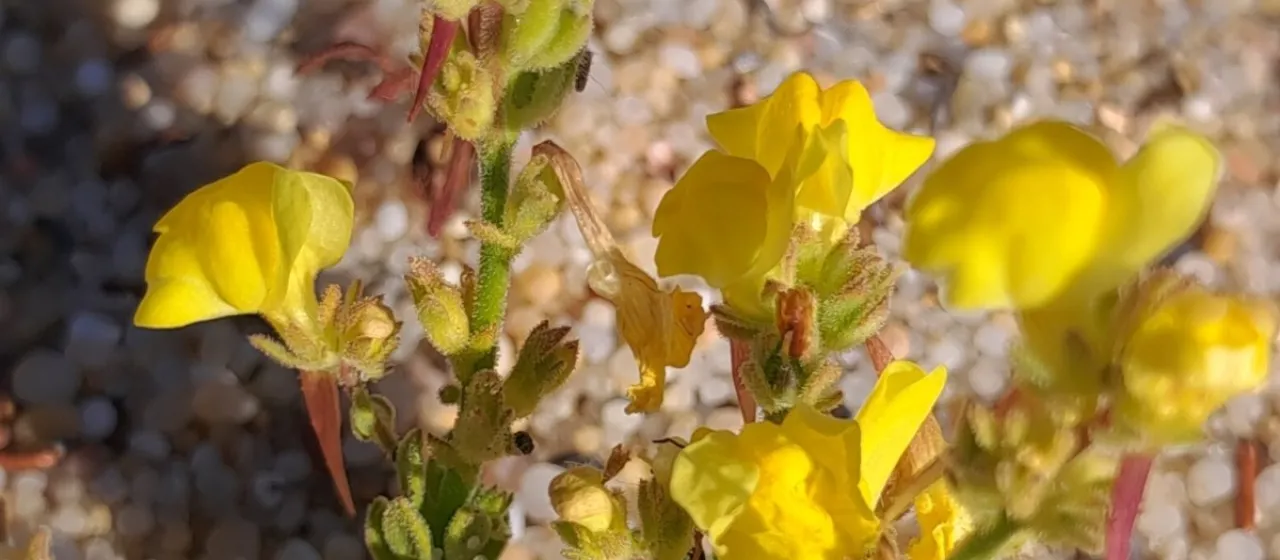
Description
Two-spotted toadflax (Latin: Linaria bipunctata) is an annual herbaceous plant species belonging to the Plantaginaceae family. It is a specialized plant that has gained attention for its unique adaptation to low-nutrient, sandy environments, making it a subject of study in both botany and sustainable landscaping.
The plant originates from the Mediterranean basin, particularly the Iberian Peninsula. Its natural range reflects an evolutionary adaptation to arid climates with thin, stony soils. This geographical background defines its role in current agricultural contexts, where it is often utilized in projects aimed at soil stabilization and biodiversity improvement.
Botanically, Linaria bipunctata is characterized by its slender, erect stems and small, linear leaves, which reduce transpiration. The flowers exhibit a distinct morphology with a prominent spur and a spotted throat pattern, which serves as a visual identifier. The root system is generally light, reflecting its preference for loose soil structures.
Regarding agrotechnical requirements, the plant thrives in full sun exposure. It requires well-draining soils and is intolerant of stagnant moisture, which can rapidly lead to root rot. Successful cultivation involves:
- Maintenance of low nutrient levels in the substrate.
- Avoidance of waterlogged soil conditions.
- Ensuring adequate spacing to prevent fungal outbreaks.
- Minimal reliance on synthetic fertilizers to maintain natural hardiness.
The primary economic and agricultural applications include its use in low-maintenance ornamental gardens and soil erosion control schemes. Because it is highly specialized, it is not considered a traditional high-yield crop, but it serves as a crucial component in restoring arid landscapes. Common threats include aphids and powdery mildew, which are best managed through proper spacing and moisture control.