
Description
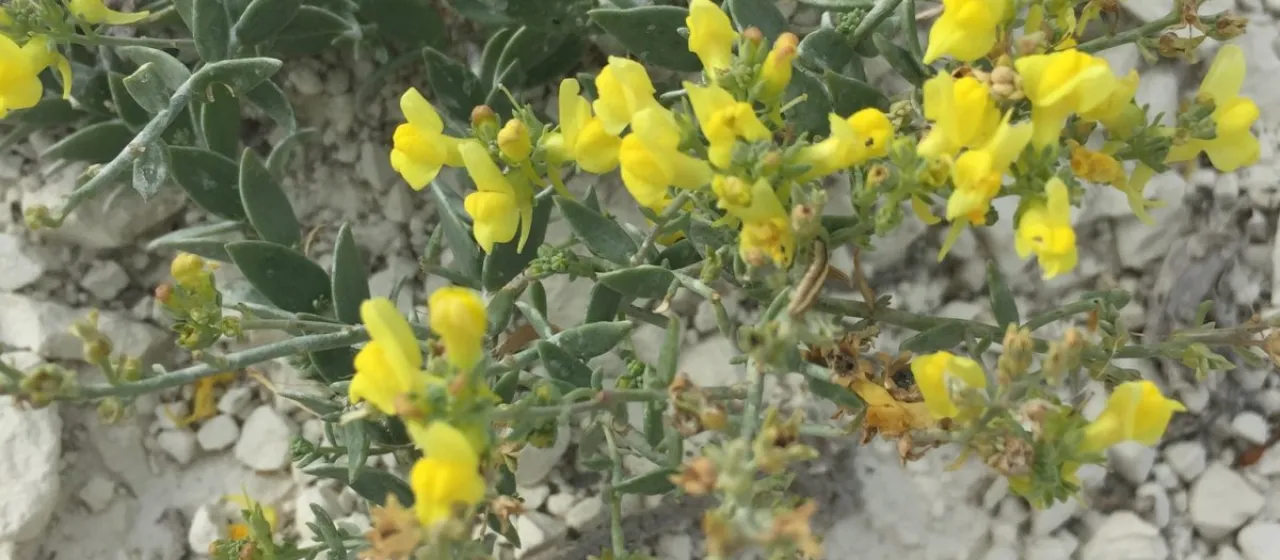
Chalk toadflax (Linaria cretacea) is a perennial herbaceous plant belonging to the Plantaginaceae family. This species is an obligate calciphile, meaning it is strictly adapted to growing on chalk outcrops. In the context of botanical classification, it represents a specialized form of vegetation that thrives in environments that are typically hostile to most other plant species.
The origin and natural distribution of this plant are closely tied to the chalk landscape of Eastern Europe. It is primarily found on eroded chalk slopes, cliffs, and screes along major river basins. Because it requires such a specific mineral substrate, it is considered a narrow endemic species, meaning its global distribution is restricted to very limited geographic areas.
Botanically, the plant displays several xeromorphic features, such as narrow, glaucous leaves that help reduce water loss through transpiration. The root system is robust, allowing the plant to anchor itself into the unstable, rocky substrate of chalk cliffs. Its flowers, typically pale yellow, are arranged in racemes and feature the characteristic spurred corolla common to the genus Linaria.
Regarding climatic and soil requirements, Chalk toadflax demands high light exposure and well-drained, nutrient-poor alkaline soils. It is highly tolerant of drought and extreme thermal fluctuations. It is not cultivated as a conventional agricultural crop; instead, it is a subject of conservation biology, as it is fragile and cannot survive in the fertile, cultivated soils typically used for industrial agriculture.
The хозяйственная significance of this plant lies primarily in its ecological role as an indicator of specialized chalk ecosystems. There is no commercial utilization for this species, and it is frequently listed in regional Red Data Books to prevent its extinction. Common pests and diseases are not systematically studied in a agricultural context, as the plants exist in wild, scattered populations that are isolated from standard agricultural pathogens.