
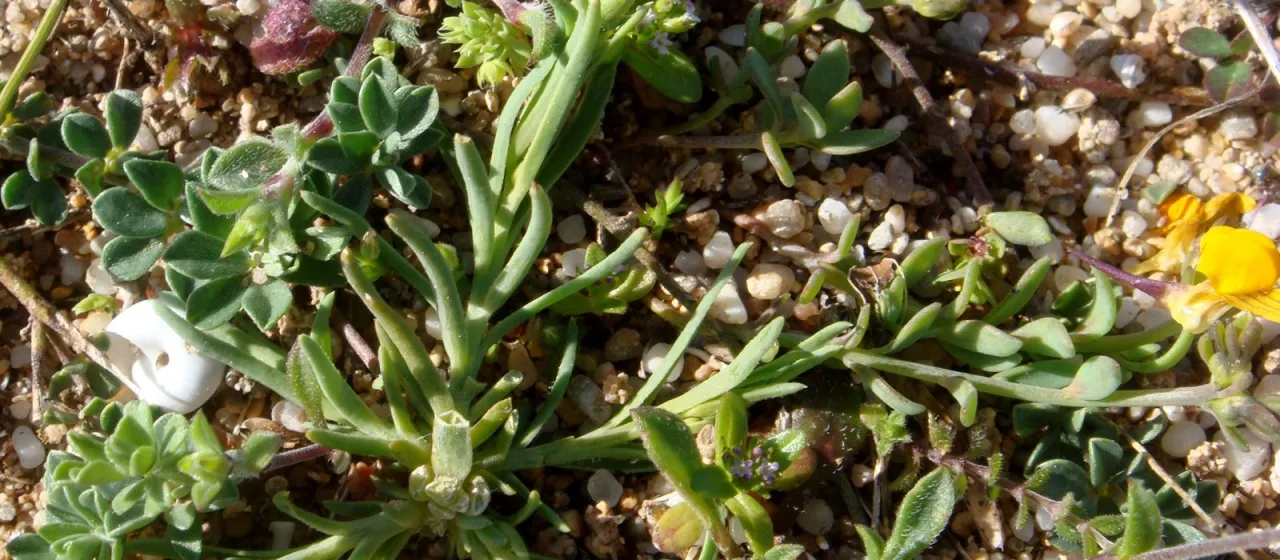
Description
Yellow toadflax (Latin Linaria flava) is a herbaceous perennial plant belonging to the Plantaginaceae family. It is a distinctive botanical species known for its resilience and ability to thrive in challenging environments where typical agronomic crops might struggle to establish.
The plant originates from the Mediterranean and Southern European regions. Its natural habitat is characterized by sunny, dry, and often nutrient-poor soils. This historical background has endowed the species with high drought tolerance, making it an interesting candidate for low-maintenance agricultural projects and soil rehabilitation.
Botanically, Linaria flava features erect stems adorned with narrow, lanceolate leaves. The most recognizable part of the plant is its raceme of bright yellow flowers, each equipped with a characteristic nectar spur. The plant develops a deep taproot, which is essential for capturing deep-seated moisture during the arid summer months.
Regarding cultivation, the primary requirement is excellent soil drainage. The plant is best suited for sandy, rocky, or chalky substrates with a neutral to alkaline pH. Agronomists emphasize that moisture management is the most critical aspect of the cultivation protocol; excessive watering must be avoided to prevent fungal infections of the root system.
Economically, this plant is valued for its potential in herbal medicine and as a soil stabilizer to prevent erosion on slopes. However, producers must remain vigilant against common threats. Typical pests include aphids, which cluster on the inflorescences, and various fungal pathogens like powdery mildew. Maintaining adequate spacing between plants and ensuring optimal air circulation is key to successful production.