
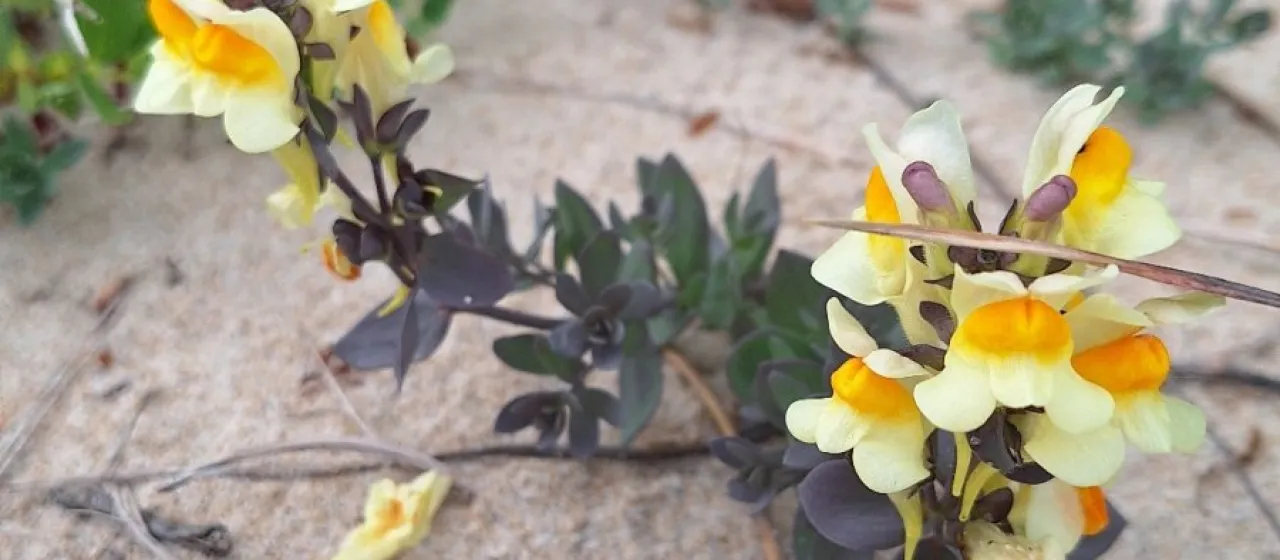
Description
Japanese toadflax (Linaria japonica) is a perennial herbaceous plant belonging to the Plantaginaceae family. This species is native to the coastal regions of East Asia, primarily inhabiting sandy dunes and maritime cliffs in Japan, Korea, and the Russian Far East, demonstrating a unique ecological niche.
Botanically, the plant is distinguished by its glaucous, lanceolate leaves and a sturdy root system, which allows it to thrive in shifting sandy soils. The plant usually reaches a height of 20 to 50 centimeters. Its floral structures are adapted to withstand the harsh coastal environment, with vibrant blooms that attract local pollinators despite strong wind exposure.
The climatic and soil requirements for Linaria japonica are strictly maritime. It demands high levels of sunlight and well-draining, nutrient-poor, sandy substrates. It possesses remarkable physiological adaptations, such as high salt tolerance and an ability to extract moisture from arid, unstable environments, making it a specialist in its habitat.
Agronomic practices for this culture are centered on soil stabilization and low-maintenance landscaping. Propagation is typically achieved through seeds sown in early spring. Because the species is naturally adapted to poor soils, excessive fertilization should be avoided to prevent plant stress and root rotting, which can occur in nutrient-heavy or poorly draining substrates.
In terms of agricultural and ecological use, Japanese toadflax is primarily valued for coastal erosion control and habitat restoration. By stabilizing loose dunes, it protects the coastline from degradation. While its ornamental value is recognized in horticulture, ongoing research into its phytochemical composition suggests potential medicinal applications that could increase its value in future agricultural markets.
- Coastal dune stabilization
- Exceptional salt tolerance
- Low-maintenance crop
- Adaptation to sandy substrates