
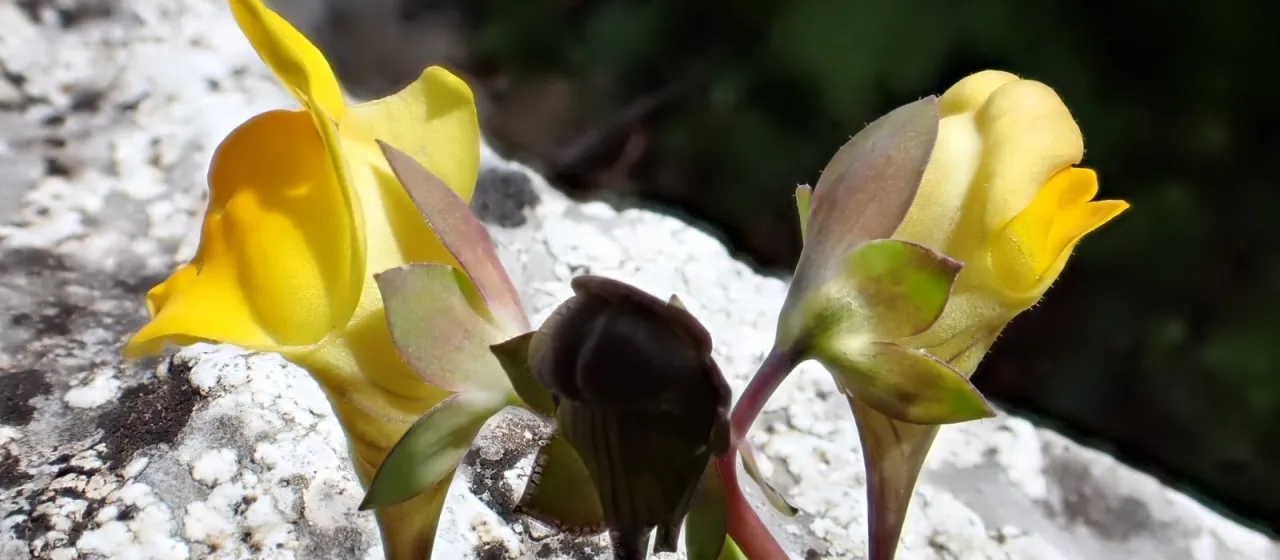
Description
Linaria platycalyx is a specialized herbaceous plant belonging to the Plantaginaceae family. While not a conventional staple crop in terms of mass production, it serves as a significant biological resource for ecological restoration and ornamental horticulture, valued for its distinctive morphological traits and resilience.
Originating primarily from the southwestern regions of Europe, specifically parts of the Iberian Peninsula, this plant has adapted to harsh environmental conditions. Its natural habitat includes rocky limestone outcrops and nutrient-poor soils, which has shaped its physiological ability to thrive in areas where more demanding species would fail to establish.
The botanical profile of Linaria platycalyx includes slender, erect stems and linear, alternate leaves adapted to minimize transpiration. The flowers exhibit the classic spurred structure characteristic of the genus, often displaying subtle color palettes. The root system is exceptionally efficient, designed to penetrate compact soil layers to access moisture reserves during prolonged dry spells.
Agronomic requirements are focused on environmental imitation of its native Mediterranean climate.
- Full sun exposure is essential for vigorous growth.
- Well-draining, stony or sandy soil textures are necessary.
- Avoidance of waterlogged conditions is critical for survival.
In terms of practical utility, Linaria platycalyx is widely utilized in sustainable landscaping, particularly for xeriscaping projects and slope stabilization. It effectively prevents soil erosion in arid environments. Common phytosanitary challenges include root rot caused by stagnant water and localized infestations of sap-sucking insects, which can be managed through proper site selection and balanced irrigation scheduling.