
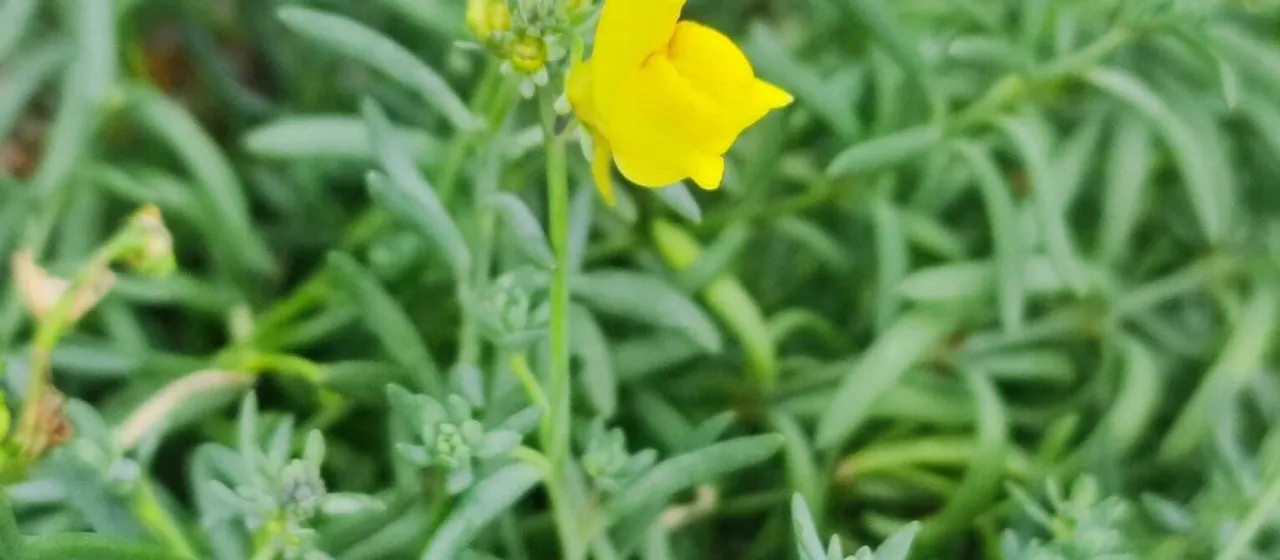
Description
Linaria propinqua is a perennial herbaceous plant belonging to the Plantaginaceae family. In agricultural and horticultural contexts, it is primarily recognized as a resilient weed that can persist in various field conditions, often challenging the cultivation of preferred crops due to its competitive nature.
Originating from Mediterranean regions and adjacent areas, Linaria propinqua is well-adapted to dry, sunny, and stony environments. Its wide range of distribution is supported by its ability to thrive in poor soil conditions, where many other plant species would struggle to establish successfully.
Botanically, the species is defined by its slender, linear leaves and characteristic spurred flowers that grow in terminal racemes. Its root system is particularly notable for being deep and persistent, allowing the plant to survive mechanical soil disturbances and regrow effectively from small root segments left in the field.
From an agronomical perspective, management of Linaria propinqua requires rigorous soil preparation and the strategic use of herbicides. Its high reproductive capacity through both seeds and vegetative propagation makes it a species that requires constant monitoring within integrated weed management (IWM) programs to prevent significant yield losses.
While not a standard agricultural crop, the species serves as an interesting subject for botanical studies, particularly regarding its ecological tolerance and chemical composition. Future research may explore the presence of bioactive compounds in the plant, although current field efforts remain focused on mitigation rather than cultivation.