
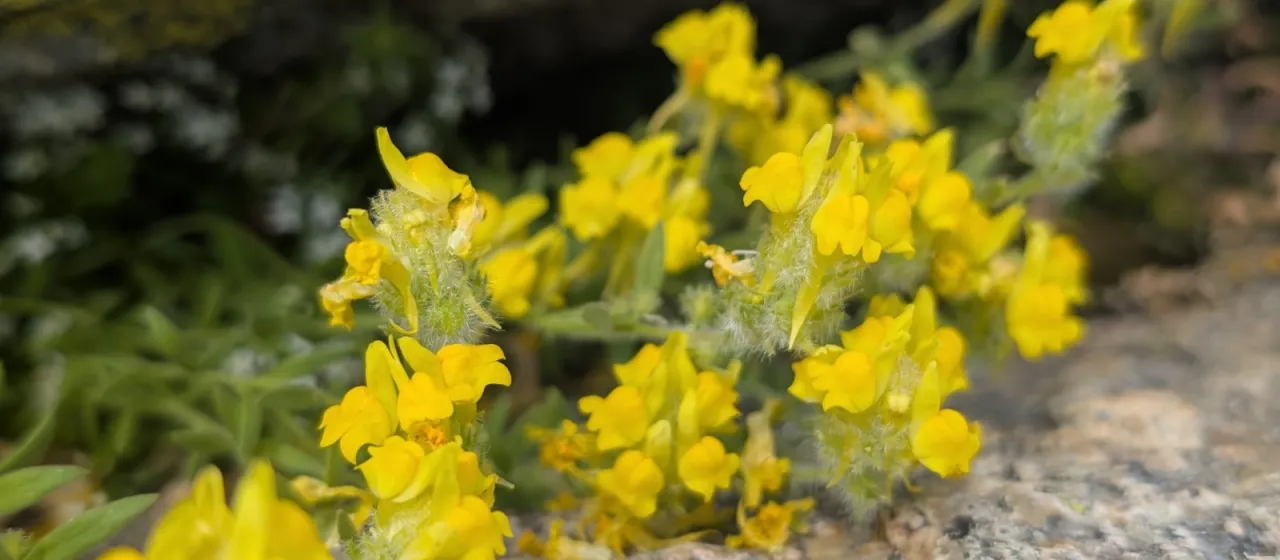
Description
Linaria saxatilis, commonly referred to as a type of toadflax, is a perennial herbaceous plant belonging to the Plantaginaceae family. This species is highly regarded in horticulture for its ability to thrive in challenging, rocky environments, making it a staple for rock gardens, scree beds, and stone troughs where other plants might struggle to establish.
The origin of this species is primarily linked to the Iberian Peninsula, where it is natively found in mountainous and rocky terrains. Its evolutionary adaptation to thin, stony soils has made it a resilient candidate for ornamental cultivation in temperate climates, provided that the growing environment mimics its natural rocky habitat.
Botanically, Linaria saxatilis is characterized by its slender, lanceolate leaves and delicate, spurred flowers, typical of the Linaria genus. The plant grows in low, spreading clumps, which provides an excellent ground-covering effect. Its growth habit is naturally restrained, which is a significant advantage for small-scale landscape designs or alpine installations.
Cultivation requirements focus heavily on soil structure and exposure. It requires extremely well-draining soil, ideally of a sandy or gravelly texture, and exposure to full sun. The plant is drought-tolerant once established and does not require fertilization; in fact, over-rich soils can lead to overly lush, weak growth and reduce the plant's natural hardiness.
In terms of garden maintenance, the main focus is preventing moisture accumulation around the crown, which can lead to fungal issues and root decay. While generally resistant to many pests, growers should monitor for aphids that can target young floral spikes. When managed correctly, Linaria saxatilis provides long-lasting ornamental value in specialized garden settings.