
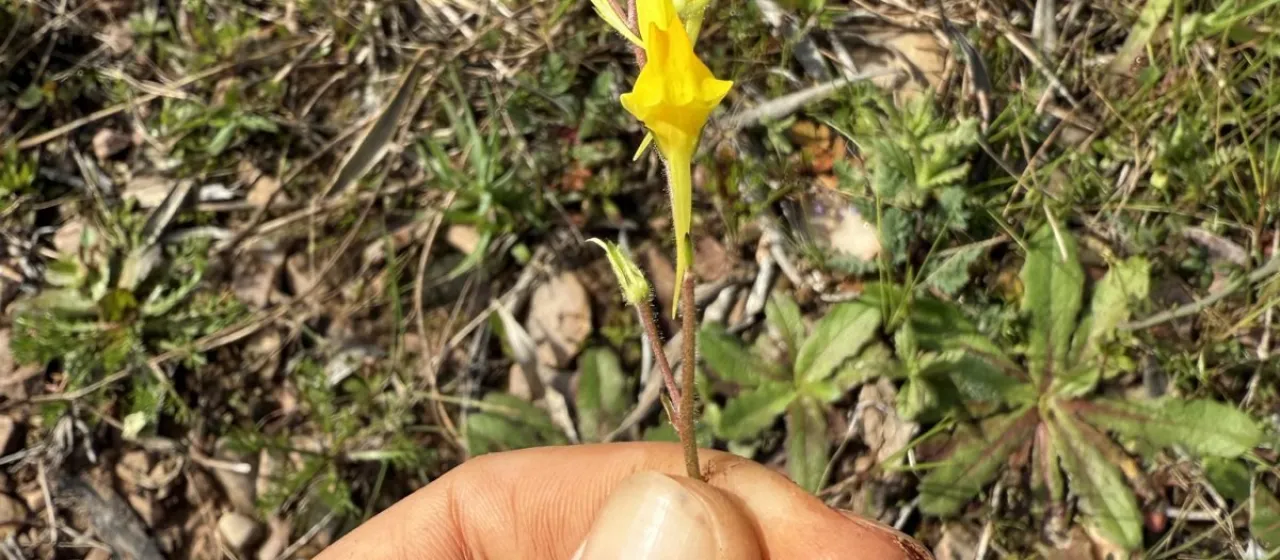
Description
Linaria spartea, commonly known as yellow toadflax, is an annual herbaceous plant belonging to the family Plantaginaceae. While not a conventional agricultural crop for mass production, it is a significant species in the ornamental plant sector, valued for its graceful habit and vibrant yellow blossoms that add a distinct texture to landscape compositions.
The plant originates from the Mediterranean region, particularly the Iberian Peninsula. Its natural distribution is largely restricted to open, sunny areas with well-drained, often sandy or stony soils. This adaptation makes it a highly resilient species in regions characterized by hot, dry summers and mild winters, reflecting its evolutionary success in Mediterranean ecosystems.
Botanically, Linaria spartea features slender, erect stems that grow up to 50 centimeters in height. Its leaves are narrow, linear, and alternate along the stem. The flowers are typically yellow and possess the classic snapdragon-like morphology, complete with a long spur that is highly attractive to various species of solitary bees and other beneficial pollinators.
For successful cultivation, the plant requires full sun exposure and sharp drainage. It performs exceptionally well in poor, gritty soils and should not be over-fertilized, as excess nutrients can result in weak, floppy stems. Sowing should occur in early spring once the danger of heavy frost has passed, ensuring that the seeds are barely covered by soil, as they require light for germination.
The primary use of Linaria spartea is in landscape architecture, specifically for wildflower meadows, rock gardens, and xeriscaping projects. Because it is naturally adapted to its habitat, it shows high resistance to most agricultural pests and diseases. However, growers should be vigilant against fungal infections if the plant is subjected to poor air circulation or waterlogged soil conditions during prolonged wet spells.
- Excellent drought tolerance for xeriscaping.
- Low maintenance requirements for soil fertility.
- High nectar production for local pollinator populations.
- Distinctive, elegant appearance for floral arrangements.