
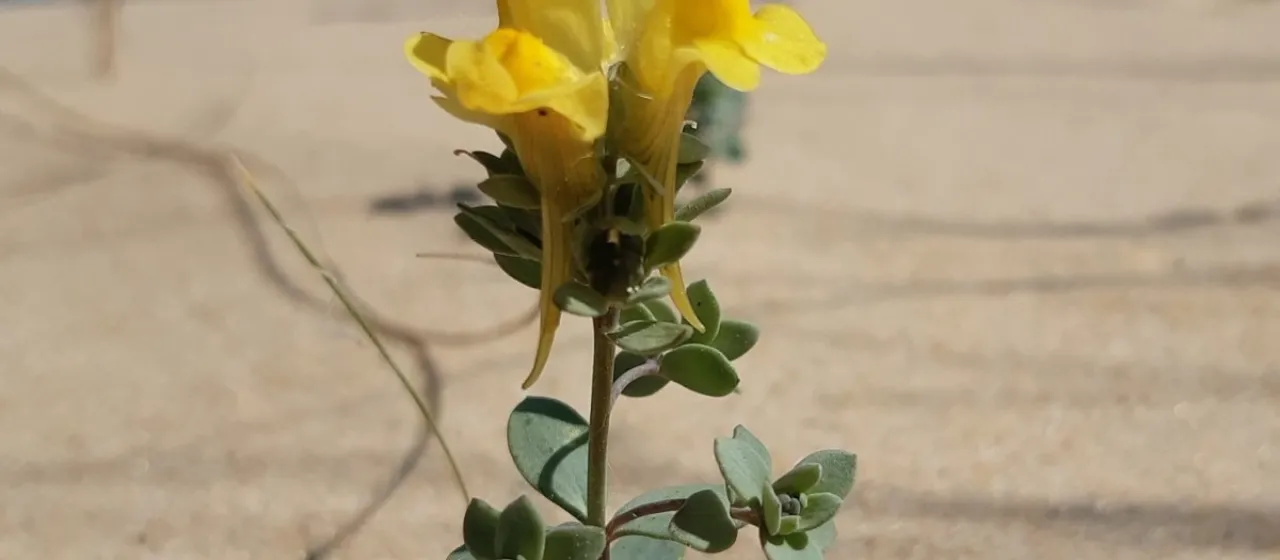
Description
Linaria thymifolia is a perennial herb belonging to the Plantaginaceae family. This species is highly specialized, known for its ability to thrive in extremely dry, nutrient-poor environments where most other plants would fail to establish. It represents an important component of the specific xerophytic flora of the Mediterranean region.
The native range of this plant is restricted to the Iberian Peninsula. It is typically found in specialized habitats, including stony slopes, limestone outcrops, and sandy dunes. Because of its narrow distribution, it is considered a rare species that often requires conservation efforts to maintain its natural populations.
Botanically, the plant is characterized by its thyme-like leaves, which provide a clear visual identifier and are responsible for its specific epithet. It develops small, distinct flowers with a characteristic spur, which is a hallmark of the genus Linaria. The root system is significantly developed relative to the above-ground biomass, allowing for efficient water uptake.
Regarding its ecological requirements, Linaria thymifolia demands high levels of sunlight and excellent soil drainage. It is poorly suited for conventional agricultural environments due to its sensitivity to moisture excess and high nitrogen availability. In a landscape context, it acts as a stabilizing agent for loose, eroded soils.
While not a traditional agricultural crop, its study contributes to the understanding of drought-resistant plant mechanisms. The species is susceptible to various soil-borne pathogens if soil humidity is too high. Conservationists monitor its health to ensure that changes in regional land management do not negatively impact its ability to reproduce in the wild.