
Description
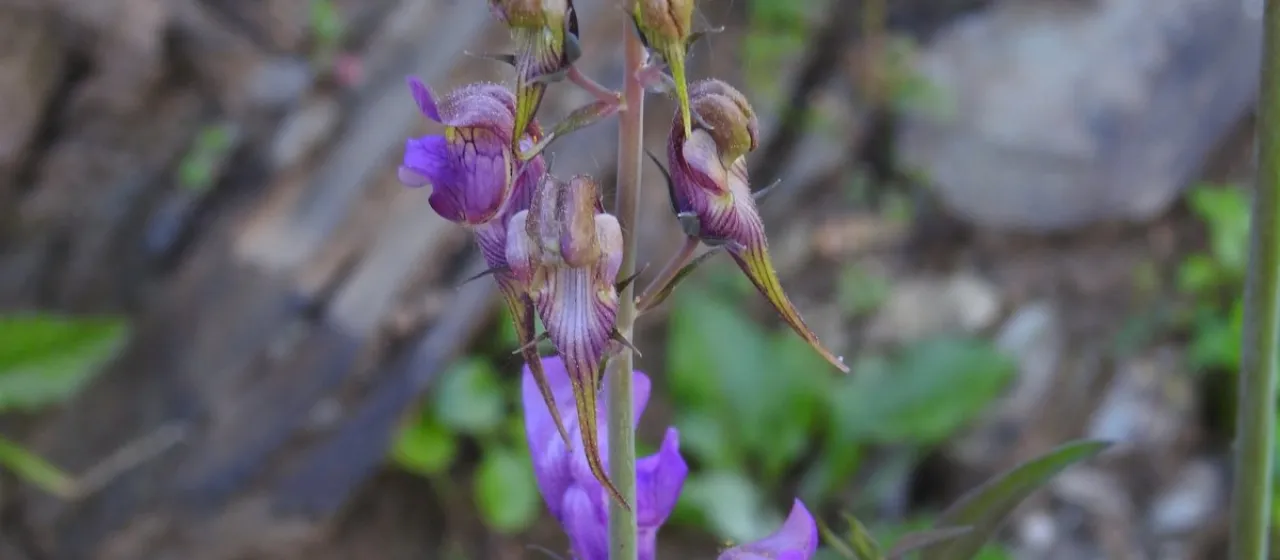
Three-birds toadflax (Linaria triornithophora) is a distinctive perennial herbaceous plant belonging to the Plantaginaceae family. The species is scientifically recognized for its unique floral arrangement, where flowers grow in whorls of three, creating the visual impression of three birds perched on the stem, which is the direct translation of its specific epithet.
The plant is native to the Iberian Peninsula, specifically Portugal and northwestern Spain. In its natural habitat, it thrives in damp, rocky slopes and sheltered woodland edges. Within agricultural and horticultural practices, it is valued for its unique morphology, primarily serving as an ornamental feature in specialized botanical displays rather than a large-scale commercial crop.
Botanically, it features sturdy stems that can grow up to 80 cm, adorned with whorled lanceolate leaves. The blossoms are large for the genus, featuring a prominent spur and a vivid purple and yellow coloration. These traits make it highly attractive to pollinators, providing significant ecological value in areas where it is cultivated.
Cultivation requirements focus on providing well-drained, nutrient-rich soil with consistent moisture levels. While it prefers full sun to light shade, it requires protection from extreme cold. In temperate zones, it is often managed as a perennial with light winter mulch, while in colder climates, it may be treated as a tender perennial or an annual to ensure plant health.
The primary use of Linaria triornithophora is ornamental, often utilized in rock gardens or border plantings. Common pests such as aphids might occur during the peak growth season, but the plant is generally resilient. Management strategies include regular inspection, ensuring good soil drainage to prevent fungal infections, and avoiding excessive overhead watering during hot spells.