
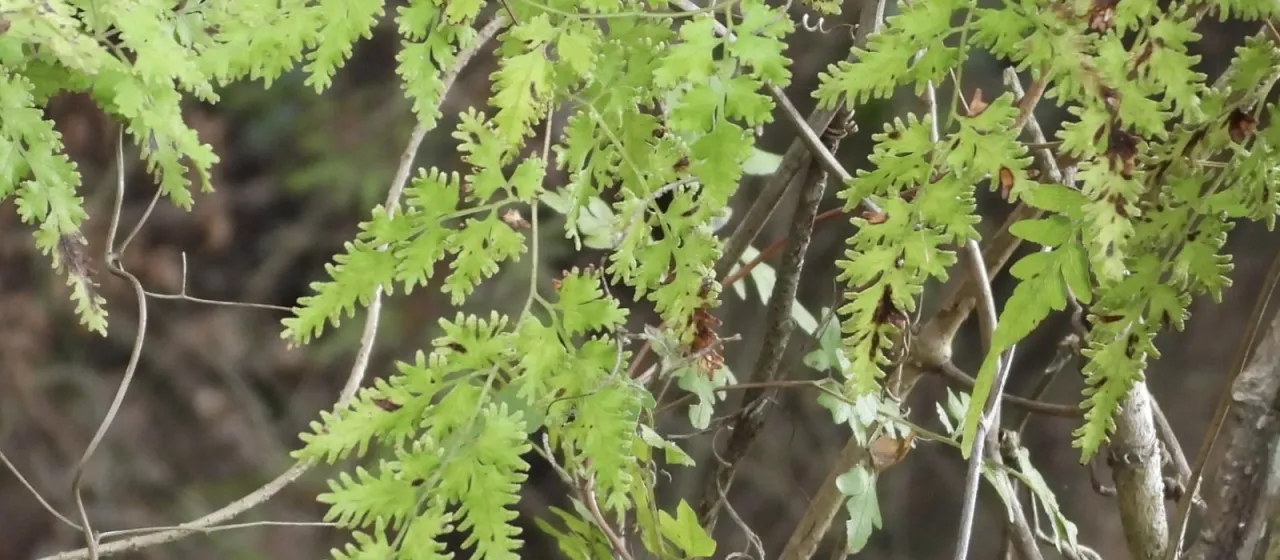
Description
The Japanese climbing fern (Lygodium japonicum) is a perennial climbing fern species within the Lygodiaceae family. Unlike most ferns that grow in clumps or rosettes, this species features thin, wire-like fronds that exhibit twining behavior, allowing it to climb structures and vegetation to heights of several meters.
Native to Eastern and Southeastern Asia, including China, Japan, and the Korean Peninsula, it has been introduced to many tropical and subtropical regions worldwide. It thrives in humid conditions and is often observed in moist woodlands, forest edges, and disturbed areas, where it can behave as an aggressive invasive species.
Botanically, the plant is characterized by its long, branching fronds. The rachis acts as a climbing stem, while the pinnae (leaflets) are finely divided, providing a delicate, feathery appearance. Spores are produced on specialized leaf segments, allowing the plant to reproduce rapidly through wind dispersal, which contributes to its spread.
In terms of cultivation, this fern prefers partial to full shade and consistently moist, well-draining soil. It is not frost-tolerant, making it suitable for temperate regions only if kept as a greenhouse or indoor ornamental plant. Standard maintenance requires providing a trellis or support system for the fronds to climb and ensuring high ambient humidity.
The Japanese climbing fern is primarily utilized in ornamental horticulture for its unique structure and ability to provide a lush, green vertical element. However, growers must be aware of its potential for rapid spread. Common pests include aphids and mites, while poor drainage can lead to root rot. Strict management is advised to prevent it from escaping cultivation.