
Description
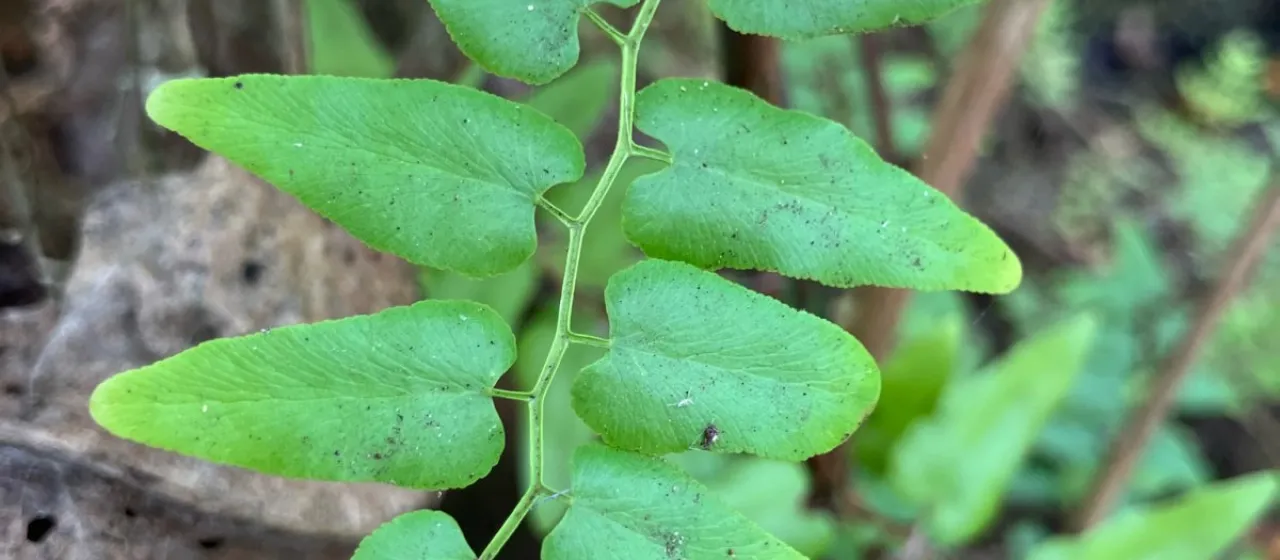
Lygodium microphyllum, commonly known as the Old World climbing fern, is a perennial vine-like fern belonging to the Lygodiaceae family. Unlike typical ground-dwelling ferns, this species utilizes a unique growth strategy where its rachis, or main stem of the frond, continues to elongate indefinitely, allowing the plant to climb trees and structures.
The species is native to tropical and subtropical regions of the Old World, including parts of Africa, Asia, and Australia. In many non-native environments, such as Florida in the United States, it has become highly invasive, colonizing wetlands, forests, and other sensitive habitats, where it outcompetes native vegetation.
Botanically, the plant is characterized by its twining fronds that can grow over 10 meters long. These fronds are finely divided and produce spores on their margins. The reproductive cycle is driven by the production of vast quantities of spores, which are easily transported by wind, water, and human activity, facilitating rapid colonization.
The growth requirements for Lygodium microphyllum are primarily high humidity and consistent moisture. It thrives in swampy areas, riverbanks, and drainage ditches. While it can tolerate various soil types, it is most prolific in environments where standing water is present for at least part of the year, provided there is no frost.
- Requires high moisture levels for optimal growth.
- Spreads aggressively via wind-dispersed spores.
- Forms dense mats that shade out native plant species.
- Increases wildfire risk by creating fuel ladders.
From a land management perspective, this plant is treated as a significant noxious weed rather than a crop. Control methods often include integrated pest management, combining mechanical cutting with herbicidal treatments or the release of biological control agents, such as specific moths or mites, to curb its proliferation.