
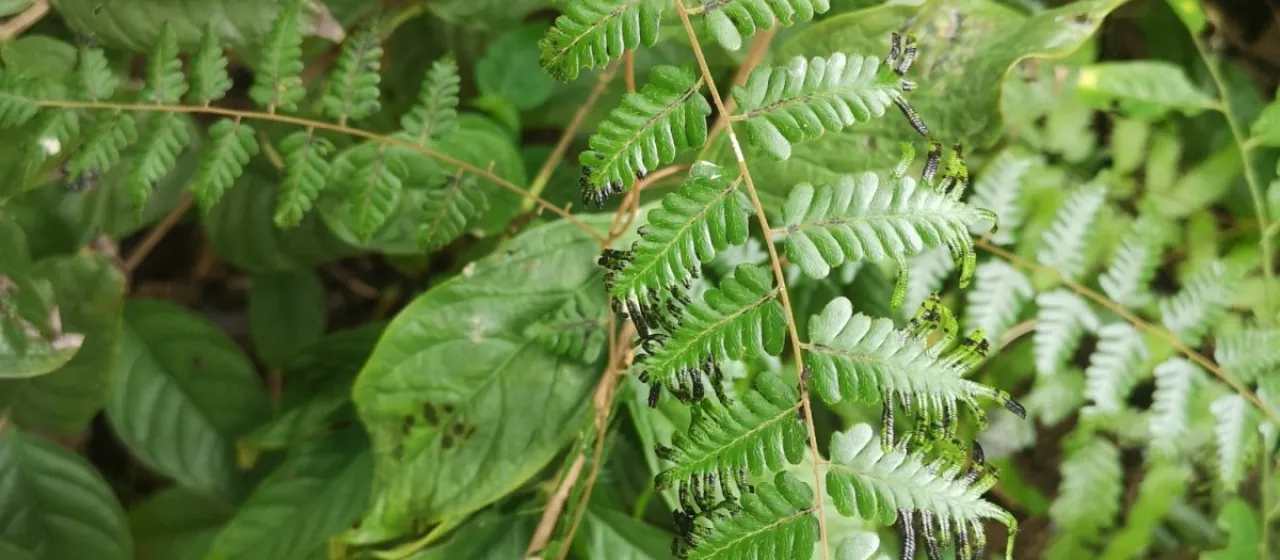
Description
Lygodium polystachyum is a distinctive species of climbing fern belonging to the Lygodiaceae family. Unlike conventional ferns, it exhibits a vining growth habit, where the rachis of the frond continues to grow indefinitely. This allows the plant to climb high into the canopy, utilizing other vegetation for structural support in its native environment.
Originating from the tropical and subtropical regions of Southeast Asia, this species is commonly found in India, the Philippines, and Indonesia. It thrives in high-humidity habitats, typically occupying the forest edges or clearings where it can secure enough light for its photosynthetic activities. Its natural distribution is strictly linked to stable, warm climatic conditions.
Botanically, the plant is characterized by its bifurcating fronds and the production of sporangia on specialized, spike-like projections along the leaf segments. The rhizome is typically creeping and subterranean, facilitating rapid colonization. This unique morphology makes it a significant study object for plant physiologists interested in indeterminate leaf growth.
Regarding agronomic requirements, Lygodium polystachyum demands precise management of its environment. It prefers well-drained, organic-rich substrates that mimic forest floor conditions. Optimal temperatures range between 20°C and 28°C. Growers must maintain high atmospheric humidity to prevent the desiccation of the fronds, which are susceptible to damage if the environment becomes too dry.
Economically, the plant serves as a valuable asset in the ornamental nursery industry, particularly for vertical landscaping and indoor tropical displays. Furthermore, in various local cultures, the tough, wire-like stems have historically been utilized in weaving crafts, contributing to the production of durable baskets and artisanal decor items, emphasizing its multipurpose utility.
- Requires consistent high humidity for healthy growth.
- Needs structural supports such as trellises or poles.
- Sensitivity to direct sunlight, favoring filtered or ambient light.
- Management of pests like spider mites in dry greenhouse conditions.