Black spruce
Picea mariana (Mill.) Britton et al.
Description
Black spruce (Picea mariana) is a key species of the pine family (Pinaceae). It is a slow-growing evergreen conifer known for its ability to thrive in poor, acidic, and waterlogged soils where many other tree species would struggle to survive.
Native to North America, the black spruce is widespread throughout the boreal forests of Canada and the northern United States. It is a dominant species in peatlands and muskeg ecosystems, showcasing remarkable resilience to cold climates and limited nutrient availability.
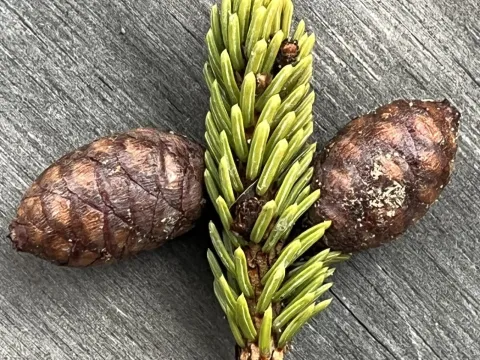
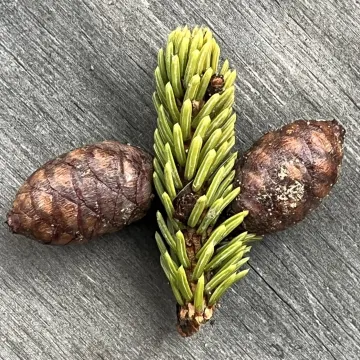
Botanically, it is identified by its narrow, conical crown and slender branches. The needles are short, stiff, and dark blue-green, while the cones are notably small and globular, often persisting on the tree for several years. This structural adaptation allows the tree to shed heavy snow efficiently.
Cultivation requirements for black spruce focus on providing sufficient moisture while ensuring the soil remains acidic. While the species is highly adaptable, it thrives best in cool, humid environments. In commercial forestry, thinning and vegetation management are essential to promote healthy growth and timber quality.
In terms of economic utility, black spruce is one of the most important species for the pulp and paper industry due to the high quality of its long wood fibers. Furthermore, it serves as a valuable resource in ornamental landscaping and ecological restoration projects in wetland areas.
Common biological threats and management issues include:
- Fungal diseases, including spruce needle cast and rust.
- Infestations by pests like the spruce budworm and various bark beetles.
- Susceptibility to windthrow in areas with shallow or unstable root zones.
Photo gallery