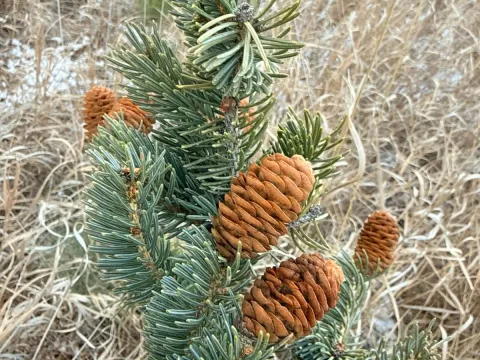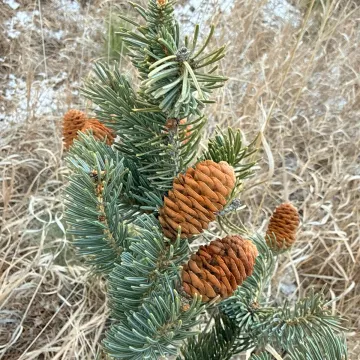
Colorado spruce
Picea pungens Engelm.
Description
The Colorado spruce, scientifically classified as Picea pungens Engelm., belongs to the Pinaceae family. As a significant agricultural and horticultural commodity, it is widely recognized for its robust nature and distinctive aesthetics. In nursery production, it is highly valued for its adaptability to various environments and its longevity as a permanent landscape fixture.
The species is native to the Rocky Mountains of North America, where it thrives in alpine climates. This geographical origin dictates its preference for well-drained soils and its ability to withstand extreme cold. Throughout the global agricultural sector, it is extensively cultivated as a premium crop for urban forestry and domestic landscape use.
Botanically, the tree is characterized by a conical growth habit with stiff, sharp needles that range in color from green to vibrant blue. The tree produces woody cones that mature annually. Its root system is moderately deep, allowing it to anchor securely in various soil types, provided that the soil structure is not excessively compact or waterlogged.
Agronomic requirements center on adequate site selection and soil health. Colorado spruce demands full sun exposure to maintain its density and color. While it is hardy once established, irrigation is critical during the first few years of growth. Applying balanced, slow-release fertilizers during the spring growth flush supports vigorous development and needle health.
Economic and utility-driven applications for this species include:
- Wholesale production of container-grown plants for retail nurseries.
- Commercial cultivation of specimens for seasonal holiday sales.
- Establishment of evergreen windbreaks and visual screens in agricultural fields.
- Use in ornamental urban planning due to its high tolerance for air pollutants.
Common issues in spruce management include fungal diseases like needle cast and tip blight, particularly in high-humidity environments. Pest pressures often involve spruce mites and aphids. Integrated Pest Management (IPM) practices, including proper plant spacing for air circulation and the strategic application of fungicides and miticides, remain the cornerstone of maintaining a healthy and profitable spruce plantation.
Photo gallery