Himalayan spruce
Picea smithiana (Wall.) Boiss.
Description
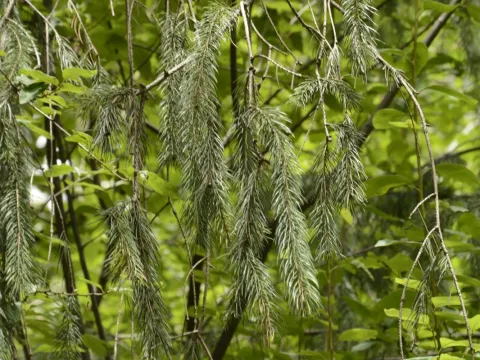
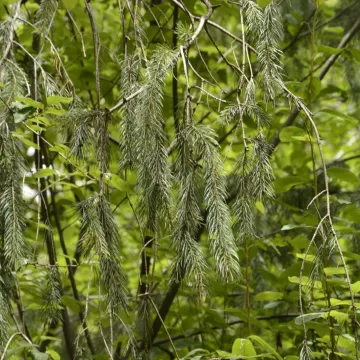
The Himalayan spruce (Picea smithiana) is a magnificent evergreen conifer belonging to the Pinaceae family. Known for its distinctively weeping branches and graceful, pendulous form, it is highly prized in horticulture for its ornamental value. Its architectural shape makes it a focal point in large landscapes and arboretums.
Native to the Western Himalayas, the species grows at altitudes ranging from 2,000 to 3,500 meters across India, Nepal, Pakistan, and Afghanistan. It thrives in regions with a temperate, humid climate and cool summers. This natural habitat provides a blueprint for the environmental conditions required when introducing this species to cultivated garden settings.
Botanically, the Himalayan spruce is characterized by its long, deep green needles and exceptionally large, cylindrical cones, which can reach up to 18 cm in length. The tree typically maintains a straight central leader, while the lateral branches drape downwards, creating an elegant silhouette. Mature trees can grow quite large, making them suitable only for spacious garden environments.
Cultivation requirements involve providing deep, fertile, and well-drained soils. The species prefers a site protected from harsh, drying winds and excessive heat. During the establishment phase, consistent irrigation is essential to ensure the root system is well-settled. While hardy once established, young specimens may require winter protection in colder climates to prevent needle desiccation.
- Ensuring adequate soil drainage to prevent root rot.
- Applying balanced coniferous fertilizers in early spring.
- Regular inspection for signs of needle cast or mites.
- Mulching around the base to retain soil moisture.
In terms of usage, the Himalayan spruce is predominantly used for decorative purposes in parks and estates. It is sensitive to typical spruce pests, such as spider mites and various aphids, as well as fungal issues like needle cast if air circulation is poor. Proper spacing during planting is a vital agronomic step to mitigate the risk of disease and promote healthy growth.
Photo gallery